Fashion Agent Guide 2026: Models, Brands & AI Agents
A new model gets a DM from a "scout" asking for a $500 portfolio fee. A designer spends two seasons pitching boutiques alone. A shopper asks an app to find a black wool coat under $300. Each of…

In this article · 18 sections +
- Four Jobs, One Title: What a Fashion Agent Actually Is
- Modeling Agents: Worth It If They Book You, Not Bill You
- Where Mother Agents Fit
- How the Money Works
- Stylist and Creative Agents
- Fashion Sales Reps and Showrooms (For Brands)
- What It Really Costs
- Rep, Showroom, or Distributor?
- AI Fashion Agents in 2026: A Closer Look at Five Tools
- Why AI Fashion Agents Are Getting Attention
- What This Means for Brands
- New York’s Fashion Workers Act: What Changed for Models
- Vetting an Agent Before You Sign
- Pitching an Agent: Two Email Templates
- Leaving an Agent Without Losing Money
- Where This Is Heading
- Conclusion
- FAQs
A new model gets a DM from a “scout” asking for a $500 portfolio fee. A designer spends two seasons pitching boutiques alone. A shopper asks an app to find a black wool coat under $300.
Each of them could use a fashion agent. They just need very different ones.
That’s the problem with this term. It covers four jobs that barely overlap, and most guides only explain one. So instead of another definition roundup, this is a practical review of all four. It covers what each agent really does, what a fair deal looks like, when one is worth hiring, and when you’re better off on your own.
Four Jobs, One Title: What a Fashion Agent Actually Is
A fashion agent is anyone, human or software, who represents one side of a fashion deal to the other. Here’s who is working for whom:
| Type | Works for | Sells to | Paid by |
|---|---|---|---|
| Model agent | Models | Designers, ad agencies, magazines | A cut of your bookings |
| Creative agent | Stylists, makeup artists, photographers | Brands, publications | A cut of your fees |
| Sales rep/showroom | Clothing and accessory brands | Boutiques, department stores | A cut of orders, sometimes plus fees |
| AI fashion agent | Shoppers or design teams | Product catalogs, design workflows | Often retailers, not you |
Modeling Agents: Worth It If They Book You, Not Bill You
A modeling agent finds work for models, negotiates rates, and manages their careers. According to Wikipedia’s overview of modeling agencies, strong agencies put money into new faces early. They help train them, set up test shoots, lay out portfolios, and produce comp cards.
After that, the job is mostly selling. Your agent pitches you to casting directors, keeps your calendar from double-booking, pushes back on usage terms that are too broad, and chases late payments.
Where Mother Agents Fit
Early on, you’ll likely hear the term “mother agent.” A mother agent usually discovers a model, teaches them the business, helps build their book, chooses which agencies in bigger markets suit them, and shares in what those agencies earn. It’s a bit like having a career manager who places you in other cities, and it’s the only time this guide will cover it.
How the Money Works
The industry norm is a 10–20% cut of your earnings. Many agencies also bill the client roughly 20% on top, so the agency can earn up to 40% on one job while no more than 20% comes out of your pay.
That’s fair. What isn’t fair is paying before you’ve earned anything.
If you’re aiming for editorial, runway, or national campaigns, an agent is close to essential. Commercial and local models can freelance, but you’ll handle contracts and collections yourself.
Stylist and Creative Agents
Creative agencies represent stylists, hair and makeup artists, and photographers. When a brand calls, the agent picks someone from the roster whose strengths suit the project. The agency usually handles bookings and invoicing, then takes a percentage of your fee. Most are based in New York, Paris, or London.
These agencies are rarely a way to break in. They work best as a way to grow. If you’re already assisting on sets or getting steady freelance jobs, an agent can bring bigger clients and take admin off your plate. If you’re still building a portfolio, you’ll struggle to get their attention.
Fashion Sales Reps and Showrooms (For Brands)
A sales rep sells your collection to wholesale buyers and gets paid a percentage of the orders they bring in. The rep shows samples or hosts buyers at a showroom or trade show. You make and ship the goods, invoice the store, and pay the rep once the store pays you.
What It Really Costs
One industry consultant puts the usual rate at around 14–15% of wholesale. Product category and volume can move that number, and some reps charge a fee as well. Showrooms add another layer: brands typically pay for placement through upfront fees, monthly or seasonal fees, a percentage of sales, or a mix of these.
That’s why the headline rate can mislead you. Here’s an illustrative example:
- $40,000 in wholesale orders at 14% = $5,600
- Plus a $1,500 seasonal showroom fee = $7,100
- Real cost: about 17.75% of wholesale
A rep who takes 16% with no fee would cost you less. Always do this math before you compare offers.
Rep, Showroom, or Distributor?
| Sales rep | Showroom | Distributor | |
|---|---|---|---|
| Owns your stock? | No | No | Yes |
| Who bills the store? | You | You | Distributor |
| Your pricing control | High | High | Lower |
| Best for | Testing one region | Fast buyer access | Volume in a new country |
The part of a showroom that’s easy to overlook is after-sales support. A good one will tell buyers when an order is running late and handle collections if a store pays late. For a small team, that support can be worth more than the introductions.
Don’t sign with anyone until you can deliver on time, every season. A Look Behind the Seams notes that new brands often can’t keep up with the traditional calendar and may do better starting with one or two seasons a year. A rep can’t fix late deliveries, and a buyer who gets a late delivery once may not order again.
AI Fashion Agents in 2026: A Closer Look at Five Tools
An AI fashion agent is software that works toward a fashion goal for you, like finding a coat, suggesting an outfit, or drafting a collection direction. It doesn’t just answer one question at a time. If that line still feels blurry, it helps to understand how AI agents work before comparing the tools below
Why AI Fashion Agents Are Getting Attention
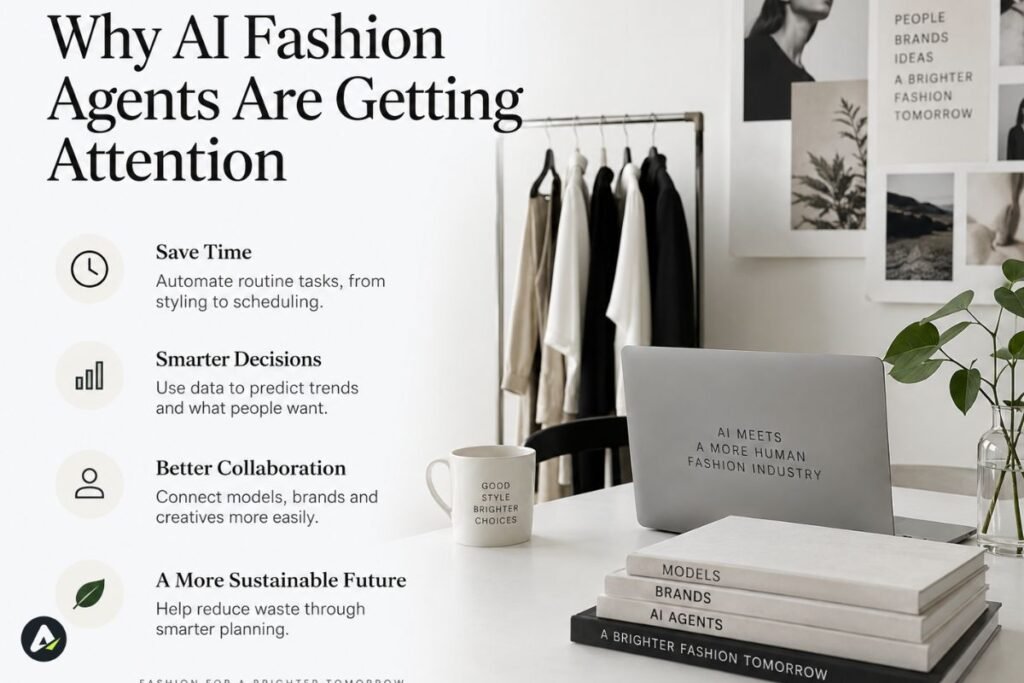
Demand is real, even if trust is still catching up. The McKinsey and BoF State of Fashion 2026 report found that shopping-related searches on generative AI platforms grew 4,700% between 2024 and 2025. But one 2026 analysis cites research showing only 12% of shoppers trust AI to buy on their behalf. People are happy to let an agent search for them. Letting it pay is a different matter.
| AI Fashion Agent | Best For | What It Does | Key Limitation |
|---|---|---|---|
| Daydream | Broad shopping discovery | Searches 325 retailers, 10,000+ brands, and around 3 million products. It can also turn saved outfit images into shoppable results. | A huge catalog can still require manual filtering. |
| Coveti | Niche designer discovery | Uses an AI agent to search a curated selection of independent designers based on mood or occasion. | Smaller selection than broad shopping platforms. |
| TryMeAI | Retailers | Helps improve the shopping experience with AI-powered functionality. | More of a retail toolkit than an autonomous shopping agent. |
| T-Fashion Agent | Fashion design teams | Researches seasonal directions, finds runway references, creates designs and technical sketches, and builds editable presentations. | Outputs can follow trends that are already emerging, leaving originality to the designer. |
| AWS Fashion Assistant Agent | Developers | An open-source Amazon Bedrock sample that supports image/text product search, style generation, and weather-based outfit suggestions. | It’s a demo and development blueprint rather than a finished consumer product. |
What This Means for Brands

A shopping agent isn’t a store buyer, but it plays a similar gatekeeping role. A buyer skims line sheets and shortlists a few labels. An agent scans product data and shows a few options. Brands with clear, detailed product and policy data have an advantage when an agent presents only a handful of choices.
The brand checklist looks like preparing for a buyer meeting: complete size, fabric, and fit details, clear return and shipping policies, and inventory that’s actually up to date.
New York’s Fashion Workers Act: What Changed for Models
Since June 19, 2025, New York has regulated model management companies directly. The law applies only in New York. Here are the main points from the NY Department of Labor:
- Agencies can’t take more than 20% of your pay.
- They can’t charge a fee or collect a deposit when you sign.
- Contracts can’t run longer than three years or renew without your written approval.
- They can’t create or edit a digital replica of you without clear written consent, given separately from your main contract. They also can’t make a power of attorney a condition of representing you (full duties list).
- Before each job, you must receive a deal memo listing total pay and terms.
What about other states? As of September 2026, I haven’t found a comparable model-protection law elsewhere in the U.S. California’s recent fashion laws target different issues: the Garment Worker Protection Act covers factory wages and piece-rate pay, and the proposed Fashion Environmental Accountability Act deals with emissions disclosure.
Vetting an Agent Before You Sign
Most bad agency experiences can be spotted before signing. Run through these six steps:
- Check the roster. Find out who they represent and where that work has appeared recently. For showrooms, ask which stores stock their brands right now.
- Use the front door. Serious agencies take submissions through their websites. An unsolicited DM asking for money is a scam until proven otherwise.
- Get the numbers in writing. That means their cut, any fees, and which expenses they can deduct from your pay.
- Read the length and renewal terms. Models in New York can compare these against the state rules above.
- Find the AI clause. In 2026, every talent contract should say how your likeness can and can’t be used.
- Pay for one legal review. An hour of a lawyer’s time costs far less than three years in the wrong contract.
Red flags that should end the conversation:
- Required photoshoots with the agency’s own photographer
- A low day rate for a campaign with unlimited usage
- A brand contract with no end date on post-termination payments (see the exit section below)
- Pressure to sign the same day
Pitching an Agent: Two Email Templates
Keep it short. Agents skim. Send links, not large attachments, and email only if the agency accepts email submissions. If you’re still putting together a book, start there.
Model → agency
Subject: New face submission – [Name], [City], [Height]
Hi [Name],
I’m [Name], [age], based in [city]. I’d love to be considered for your [board].
Height [ ] · Bust/Chest [ ] · Waist [ ] · Hips [ ] · Shoe [ ]
Digitals (natural light, no makeup): [link]
Instagram: [@handle]I’m currently unrepresented and free to meet from [date].
Thanks for looking,
[Name] · [Phone]
Brand → sales rep or showroom
Subject: [Brand] – [category] seeking [territory] representation
Hi [Name],
[Brand] is a [category] label with wholesale prices of [–– ] and retail prices of [–– ]. We’re stocked in [number] stores, including [one name], and we deliver [seasons] with [lead time] lead times.
Your roster looks like a natural fit for our customer, and I’d like to talk about [season].
Line sheet: [link] · Lookbook: [link]
Would you have 20 minutes next week?
[Name] · [Title] · [Phone]
Leaving an Agent Without Losing Money

Leaving an agent usually causes more disputes than signing with one. The fights are rarely about the breakup itself. They’re about who gets paid for work that’s already in progress.
Models: Give notice exactly the way your contract requires, and ask for a final statement of earnings and deductions. Get written confirmation of which bookings made before you left still pay the old agency.
Brands: Look for the tail clause, which sets how long a former rep keeps earning on orders or reorders from stores they brought in. Negotiate a fixed window, such as one season, rather than an open-ended one. Agree in writing on who handles open orders and unpaid invoices, and get your samples and buyer records back.
In the UK and EU, commercial agent laws can entitle sales reps to compensation when a contract ends, even if they did nothing wrong. Get local advice before you give notice.
Where This Is Heading
Expect more hybrid agencies. Software will take over scheduling, follow-ups, and first-pass scouting research, while people keep negotiation and relationships. General-purpose tools like Lindy’s automation agents can already handle that kind of routine admin.
On the shopping side, the infrastructure is being built now. Google introduced its Universal Commerce Protocol at NRF 2026 with partners including Shopify, Etsy, Target, and Walmart. Shared standards like this let one agent shop across many stores. Modern Retail describes 2026 as the year companies compete over whose agent becomes people’s default way to shop.
And for talent, the most important change may be legal: consent-based digital replicas could turn a hidden contract clause into something models negotiate and get paid for.
Conclusion
The right fashion agent depends on what you need. A model needs someone who books work. A stylist needs someone who opens doors to bigger clients. A brand needs someone who can get buyers to place orders. A shopper needs software that saves time without making the choices for them.
Across all four, the rules are the same. Get every term in writing. Calculate what you’ll actually pay, not just the headline percentage. Read the exit clause before you sign. And if anyone asks for money before they’ve earned any for you, walk away.
FAQs
Q. Can you model without an agent?
Yes, especially for commercial and local work. Without an agent, you’ll negotiate rates and chase payments yourself, and top editorial and runway jobs are much harder to reach.
Q. Is it normal to pay a modeling agency upfront?
No. Reputable agencies make money when you work, and New York bans signing fees outright. See the New York section above for the full rules.
Q. How is a sales rep different from a showroom?
A rep sells your line, often on the road or at trade shows. A showroom sells from a fixed space and often handles order follow-up and collections too, usually for fees plus a cut of sales.
Q. What’s the best AI app for finding clothes?
For wide catalog searches, Daydream is the strongest option right now. For independent and niche designers, try Coveti. The five-tool review above compares them in more detail.
Q. Are AI fashion agents actually agents, or just tools?
Some are both. Shopping agents that search and refine options on their own act like agents. Try-on and sizing features on product pages work more like tools. This comparison of AI tools vs. AI agents explains the difference.
Q. How do I become a fashion agent?
Most agents start as assistants or bookers at an agency. A degree in communications, marketing, or PR helps, but industry contacts and negotiation skills matter more.
Q. What agency did Kate Moss work for?
Sarah Doukas of Storm Model Management discovered her in London at 14. Moss stayed with Storm for most of her career, then launched the Kate Moss Agency in 2016.
Related: AI Agent Identity vs Human Identity: The Access Control Model That Actually Works
| Disclaimer: This article is for informational purposes only. Fees, laws, contracts, and AI agent features can change, so verify current terms with the agency, provider, or a qualified professional before making a decision. |

Maliha
AI is moving steadily from experimental technology into the products and workflows people rely on every day. Maliha Irfan is a technology writer covering artificial intelligence, automation, and emerging software. Her work focuses on the practical side of AI agents, exploring how these systems are being used, what they can realistically accomplish, and the limitations that matter when businesses and individuals adopt them.
More from Maliha →