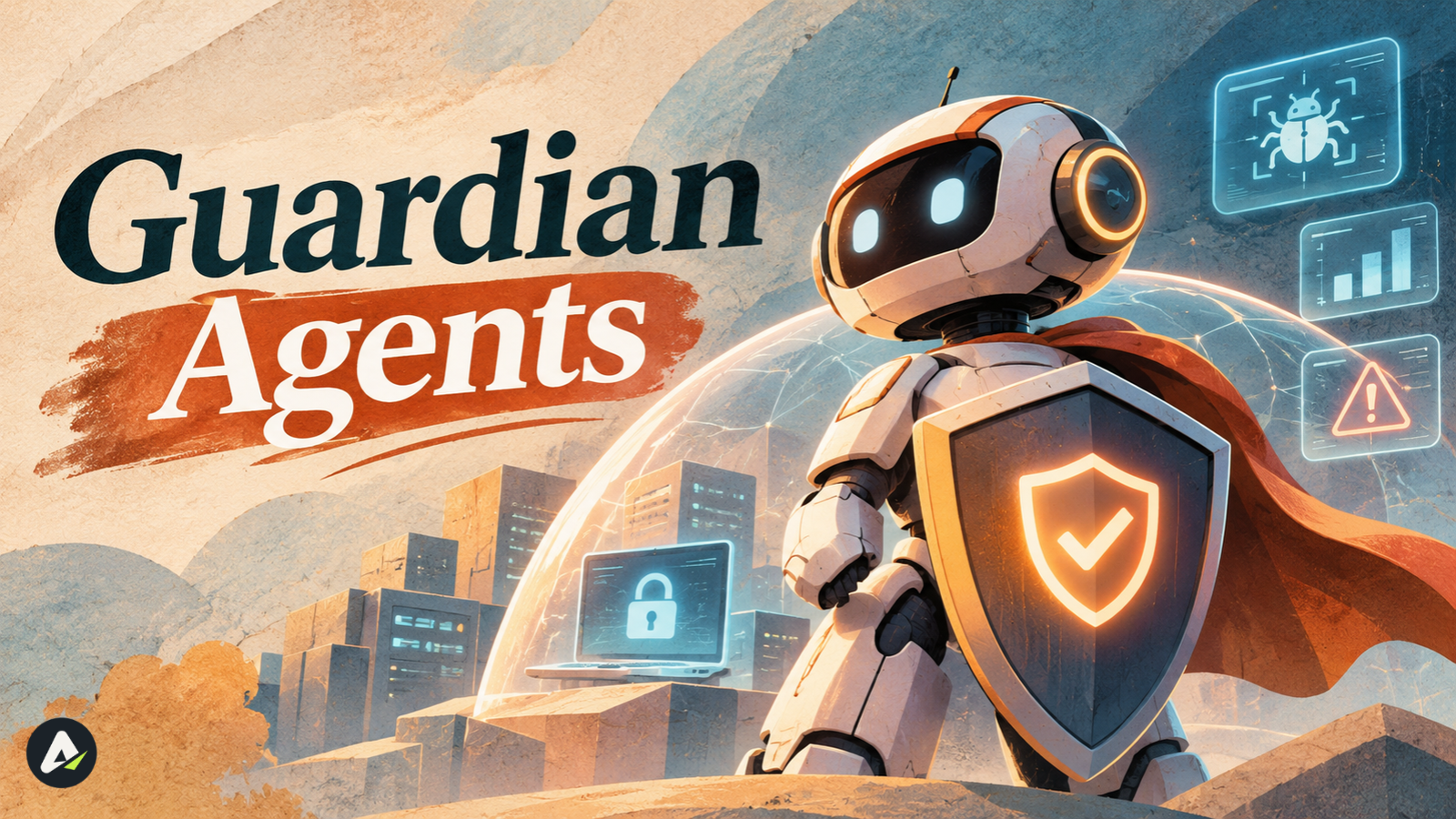
How Do Guardian Agents Detect and Stop AI Security Threats?
Discover how guardian agents monitor AI behavior, enforce security policies, prevent unauthorized actions, and improve control over autonomous AI workflows.

In this article · 21 sections +
- What Are Guardian Agents?
- Is a Guardian Just Middleware?
- Is a Guardian a New Kind of Agent?
- Why Do AI Agents Need Guardians?
- Where Must a Guardian Sit to Stop an Action?
- What Happens When the Guardian Fails?
- How Does a Guardian Agent Spot the Lethal Trifecta?
- How Do You Keep the Guardian’s Context Honest?
- How Do You Avoid Approval Fatigue?
- What Does a Minimal Gate Look Like?
- Do Guardian Agents Slow Down AI Agents?
- How Do Guardian Agents Work?
- Who Holds the Kill Switch?
- Can Guardian Agents Prevent Prompt Injection?
- How Do Guardrails, Posture Tools and Guardians Differ?
- What Do Gartner and Microsoft Say About Guardian Agents?
- Do Guardian Agents Help With EU AI Act Compliance?
- How Do You Know a Guardian Works?
- How Should a Team Start?
- Should You Build, Use Open Source or Buy?
- FAQs
An AI agent with write access to billing, banking, or customer email doesn’t need a hacker to cause a breach. One ambiguous prompt, one poisoned PDF, or one hallucinated parameter is enough, and the transaction settles before anyone checks a log.
- A guardian agent is a supervising system that monitors, reviews, and controls the actions of other AI agents while they run. It reads context, scores risk, and decides whether to allow, pause, restrict, or block each action, using deterministic checks for speed and model judgment for ambiguous cases.
- It doesn’t replace your security stack. It acts as a runtime decision point inside it.
Most buyers settle for observability and mistake it for control. A trace review after an API call returns helps with post-mortems and can’t stop a wire transfer.
Three architectural tests separate a true runtime guardian from passive monitoring: interception (does it block before side effects occur?), failure mode (what does it do when it stalls?), and control-plane isolation (who holds the kill switch?). The sections below apply each test in turn.
Key takeaways
- A guardian agent counts as control only if it can stop an action before its side effects occur.
- Fast deterministic checks block inline, while slower model-based investigators work asynchronously.
- High-impact actions should fail closed, and the kill switch must sit outside the agent’s reach.
- Guardians limit what a prompt injection can do. They don’t end injection, and they supply EU AI Act evidence, not compliance.
What Are Guardian Agents?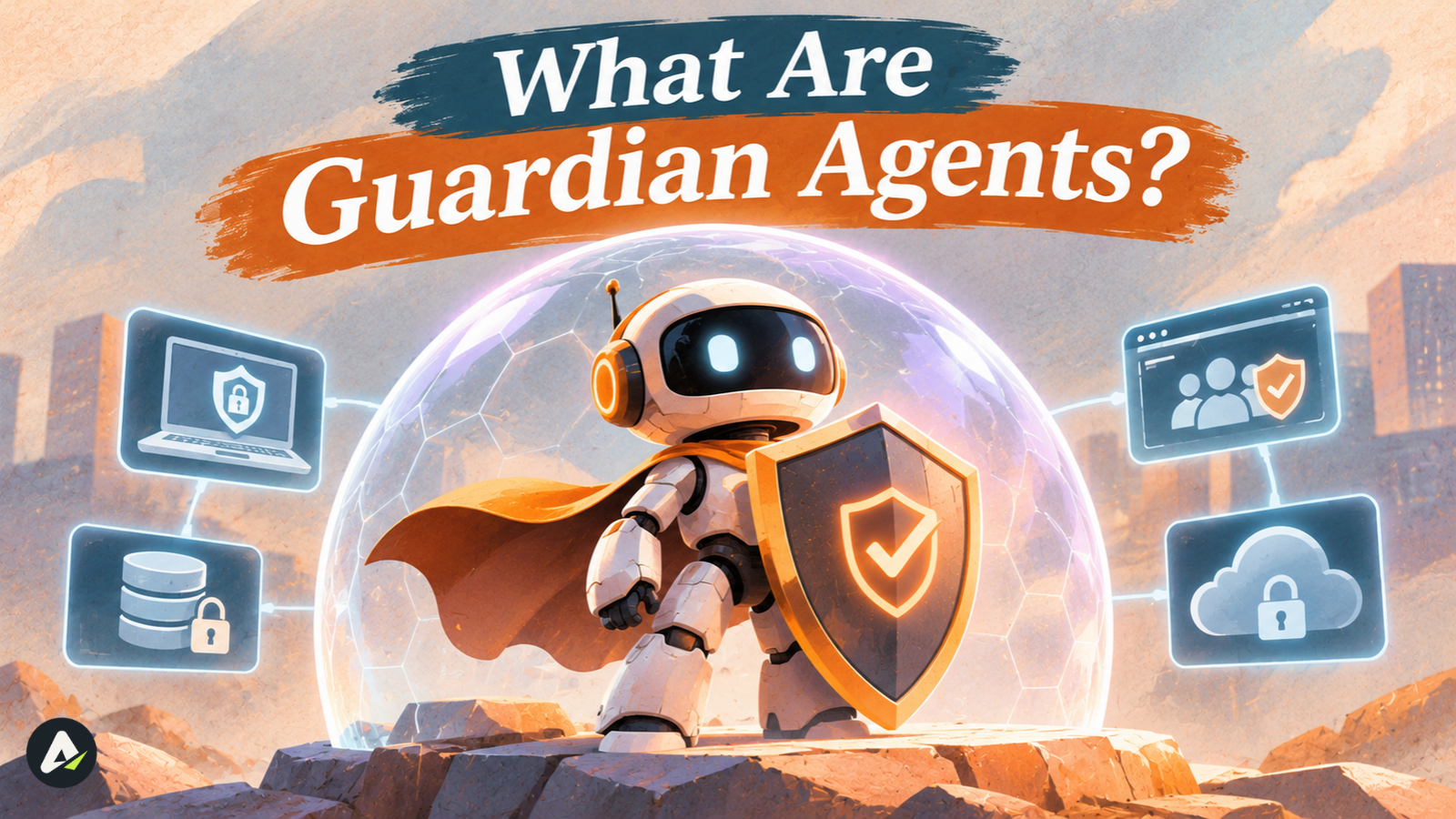
Gartner’s June 2025 release names three roles.
| Role | What it does | Example |
|---|---|---|
| Monitor | Tracks agent actions for human or AI follow-up | Flags a sudden spike in file downloads |
| Reviewer | Checks output for accuracy and acceptable use | Rejects a report with invented figures |
| Protector | Adjusts or blocks actions and permissions in operation | Revokes write access mid-task |
Is a Guardian Just Middleware?
No. The difference is judgment. Deterministic rules are fast, mandatory, and cheap: an allowlist, a schema check, a spending limit. But they only see form. A refund request can pass the schema and the allowlist and still be social engineering. Agentic judgment weighs context the rules can’t express, adjusts permissions as risk shifts, and investigates anomalies. In practice, the rules form the floor, and the guardian agent supervises above them. How much judgment you allow follows how much autonomy agents get and the cost of a wrong call.
Is a Guardian a New Kind of Agent?
No. A guardian is an architectural role, not a model class, and it works in two modes that do different jobs. Inline protectors sit in the execution path on a tight latency budget: deterministic rules plus, at most, a small classifier, with authority to block writes. Only they can stop a non-idempotent side effect, such as a card charge or a sent email, because nothing downstream can undo it. Asynchronous investigators work outside the path with seconds or minutes to spare. They audit and quarantine: a full model reasons over history, triages anomalies, revokes credentials, and isolates sessions. Gartner’s definition spans both, which resolves the apparent gap between “a deterministic engine” and “an agent that investigates.” Neither mode needs tool access beyond its own job, so a locked-down verifier polices a tool-wielding worker. That separation of duties is the point: the supervisor must not hold the powers of the agent it supervises. Enterprises also run mixed models across tasks, so the guardian should sit outside any single vendor’s agent loop. This matters most once agentic workflows chain tools together.
Why Do AI Agents Need Guardians?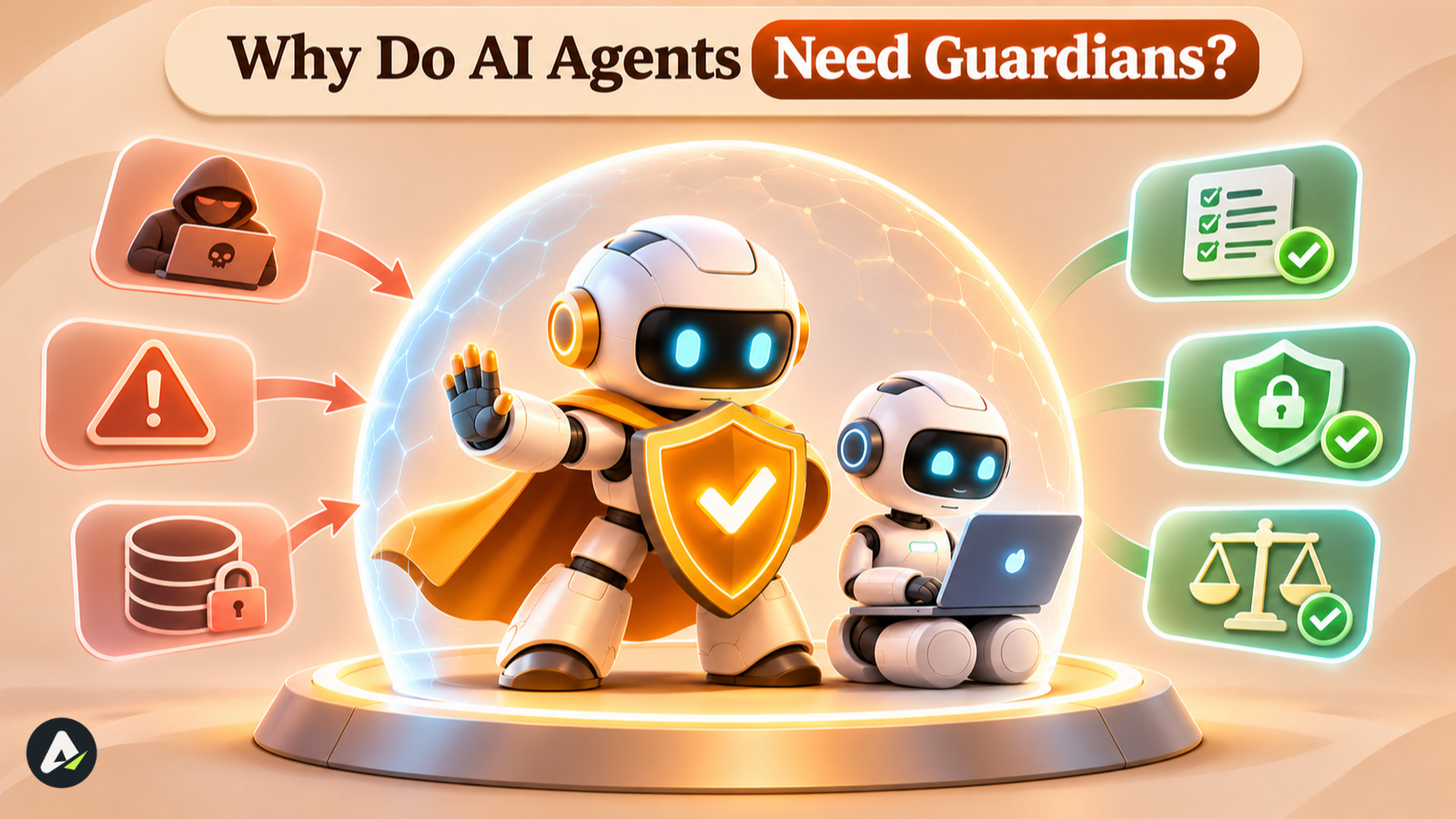
Agents hold real credentials, act on real systems, and behave in ways nobody can fully predict. A mistake or a manipulated input then becomes a financial, legal, or data-loss event. A guardian puts a check between the agent’s decision and its effect.
The OWASP Top 10 for Agentic Applications 2026, published December 9, 2025, names the risks. Six show why a runtime guardian matters:
- ASI01, Agent Goal Hijack. Hidden instructions redirect what the agent is trying to do.
- ASI02, Tool Misuse and Exploitation. A legitimate agent uses a valid tool in a way nobody authorized.
- ASI03, Identity and Privilege Abuse. Inherited or delegated credentials let an agent do more than its owner intended, a problem that grows fastest with agents with cloud access.
- ASI04, Agentic Supply Chain Vulnerabilities. A tool, model, prompt, or server the agent loads is compromised.
- ASI05, Unexpected Code Execution. An agent generates and runs shell commands, SQL, or scripts that nobody reviewed.
- ASI06, Memory and Context Poisoning. Stored context is corrupted and skews later decisions.
ASI01 and ASI02 are where a runtime guardian earns its keep, because the agent is legitimate and the tool is valid. Only the intent is wrong. ASI05 raises the stakes for coding agents with shell access and browser agents acting inside signed-in SaaS sessions. CRM and ERP write actions face the same exposure.
Where Must a Guardian Sit to Stop an Action?
Inside the execution path, as a blocking control. Arcjet’s guardian-agent guide draws the line: a check that reads traces after issueRefund() returns is observability, not enforcement. The agent proposes, the guardian decides, and only then does the tool run:
agent proposes action
        |
        v
  gate: rules -> taint check -> policy / model judge
        |
   +----+-----------+
   |                |
 allow        ask a human / deny
   |                |
 tool runs      action never happens
   |                |
   +-------+--------+
           v
audit log| Placement | Blocks before the action lands? | Blind spot |
|---|---|---|
| Observer (logs and traces) | No | Arrives after the damage |
| Gateway (API or MCP proxy) | Yes, for traffic through it | Misses local and stdio tools it doesn’t front |
| Runtime gate (tool handler or agent loop) | Yes | Covers only code you control |
| Identity layer | Limits what a credential can reach | Can’t judge intent inside granted rights |
Most deployments combine two rows, because a gate without a verifiable identity invites session hijacking and lateral movement between agents. Bind each call to a workload identity scoped to the tool, such as a SPIFFE ID, instead of a static token. An MCP gateway sees every tool call routed through it but not local stdio tools, so back it with a gate in the handler for anything it can’t front. Agent-to-agent traffic needs the same gate: authenticate each peer and inspect what it asks for before a tool call fires. The identity layer works best when it is dynamic, with task-scoped, temporary permissions that tighten when risk rises, the approach Microsoft describes for its Guardian Agents. Avoid shared service accounts, and pass the human’s identity down the chain with on-behalf-of delegation, so every action traces to a person and a scope.
What Happens When the Guardian Fails?
High-impact actions must fail closed: a timeout is a denial, never an implicit approval. If the guardian stalls during a payment, a permission grant, or an external send, execution halts. Reads can fail open, but decide that per tool and check each library’s default. Some return “allow” with an error code when a check can’t finish, while others block unless you opt in to continuing.
Some low-risk, reversible work can’t wait for a slow check. Let it run optimistically, keep a compensating step ready (void the draft, release the hold) and roll back if the late verdict says no. Never use this path for an irreversible action. When you roll out a gate, run it in shadow mode first. It logs what it would have blocked without blocking anything, so you find false positives before they halt real work.
Asynchronous investigators can’t prevent fast loops. An agent can finish three tool calls in under half a second, and an investigator needs seconds. In a swarm where sub-agents spawn sub-agents, the gap grows. Treat investigators as forensic and recovery tools: they revoke tokens, quarantine sessions, and trigger compensating rollbacks for reversible work, such as a database savepoint. They can’t undo a charge or a sent email, so gate those inline at every sub-agent’s tool boundary. To keep an investigator useful, snapshot the execution context when it starts, hold any high-impact action that depends on that session until the verdict returns, and scope remediation to the snapshot.
How Does a Guardian Agent Spot the Lethal Trifecta?
Simon Willison’s “lethal trifecta” is private data, untrusted content, and external communication in one system. A guardian agent can only detect it if data carries its origin. Track provenance at the object or field level, not with one flag on the whole session: a CRM that mixes verified records with customer-submitted tickets would otherwise taint every run, and every write would wait on a reviewer. Escalate only when a tainted payload reaches an irreversible write, an external send or an identity change.
The hard part is that a model rewrites text and drops any tag it was given. A polite summary of a poisoned ticket arrives clean. So don’t ask the model to carry the tag. The runtime records which tainted inputs sat in context when a value was produced and attaches that lineage itself. For structured outputs, require JSON with a provenance array, and have the runtime check it against the real inputs. When the lineage is unclear, treat the value as tainted.
Sequences make this harder. Take an agent that looks up a supplier, changes the bank details, and submits a payment. Each step passes alone, and only the chain does damage, so the guardian must score the sequence, not each call.
How Do You Keep the Guardian’s Context Honest?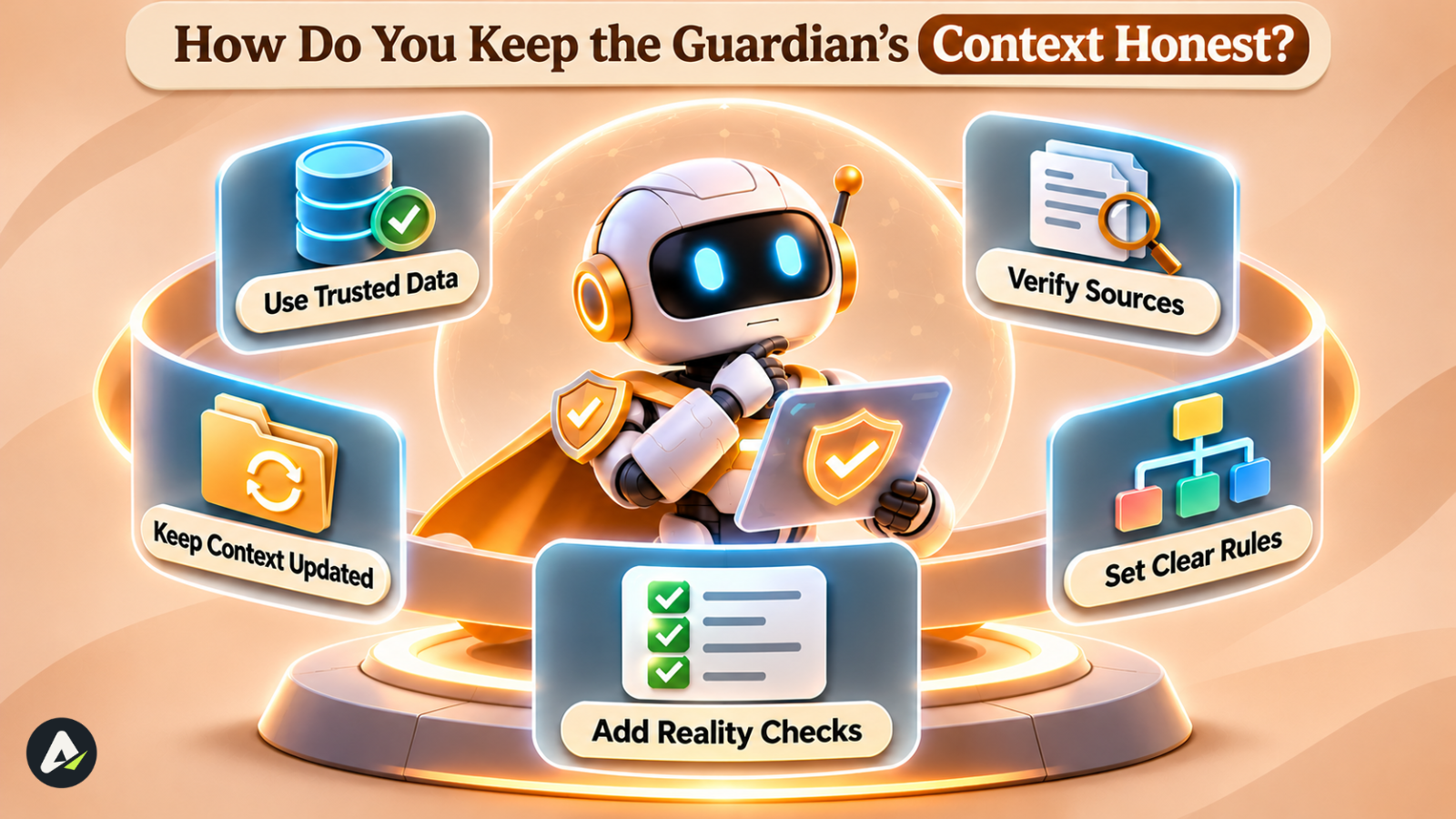
An append-only log protects against tampered history. It doesn’t protect against drift in meaning. Memory can be summarized, poisoned or quietly out of date (OWASP’s ASI06), and the guardian then approves an action against context that no longer holds. Build the guardian’s state from the record of actions plus data origin, and watch for the slow change in what an agent knows, the subject of knowledge base drift and agent calibration. The same record exposes ASI10, Rogue Agents: an agent whose actions drift away from its assigned task shows up as a gap between its history and its role.
In a multi-agent system, the dangerous input often comes from another agent, not a web page. A data-analysis agent ingests a tampered document, and a marketing agent then trusts its output. A guardian that validates only the first user prompt misses poisoned handoffs mid-workflow. OWASP names two related risks. ASI07, Insecure Inter-Agent Communication, covers messages that are spoofed, replayed, or altered. ASI08, Cascading Failures, covers one fault spreading across agents and tools. Treat every peer message as untrusted input, and require signed messages so the guardian can check provenance before a message triggers a tool call. Teams that have hit multi-agent coordination breakdowns know how quickly one bad handoff spreads.
How Do You Avoid Approval Fatigue?
If a guardian escalates a large share of runs, reviewers start rubber-stamping, and the guardian becomes theater. OWASP’s ASI09, Human-Agent Trust Exploitation, describes the worst case: an agent that words its request so a tired reviewer approves it. Cap the blast radius instead. Auto-approve small actions up to a daily total, escalate only what exceeds it, and prefer reversible forms, such as a pending hold instead of an instant payout. The same limits frame the debate over banks trusting agents with money.
What Does a Minimal Gate Look Like?
This original sketch combines the main decisions: provenance computed by the runtime, a timeout on a high-impact action means deny, a daily cap limits blast radius, and every proposal, decision and result lands in an append-only ledger. Back the ledger with a table where the agent’s database role can insert but never update or delete. The amounts are placeholders.
HIGH_IMPACT = {"issue_refund", "change_bank_details", "send_external_email"}
DAILY_REFUND_CAP = 500

def gate(tool, args, ctx):
    lineage = ctx.lineage_of(args)           # computed by the runtime, not reported by the model
    if tool in HIGH_IMPACT and lineage.has_untrusted:
        return "needs_approval"
    try:
        verdict = policy_check(tool, args, timeout=0.5)
    except TimeoutError:
        return "deny" if tool in HIGH_IMPACT else "allow_and_log"
    if tool == "issue_refund" and ctx.refunded_today + args["amount"] > DAILY_REFUND_CAP:
        return "needs_approval"
    return verdict  # "allow", "deny" or "needs_approval"

def call_tool(tool, args, ctx):
    proposal = ledger.append(run=ctx.run_id, kind="proposed", tool=tool, args=args)
    decision = gate(tool, args, ctx)         # runs before the tool does
    ledger.append(run=ctx.run_id, kind="decision", ref=proposal.id, value=decision)
    if decision == "deny":
        raise PermissionError(f"{tool} blocked by policy")
    if decision == "needs_approval":
        # In production, serialize state and suspend the run (durable
        # execution or interrupt()); resume on approval. Don't block a thread.
        wait_for_human(tool, args)
    result = run_tool(tool, args)
    ledger.append(run=ctx.run_id, kind="result", ref=proposal.id, value=result)
    return result
Do Guardian Agents Slow Down AI Agents?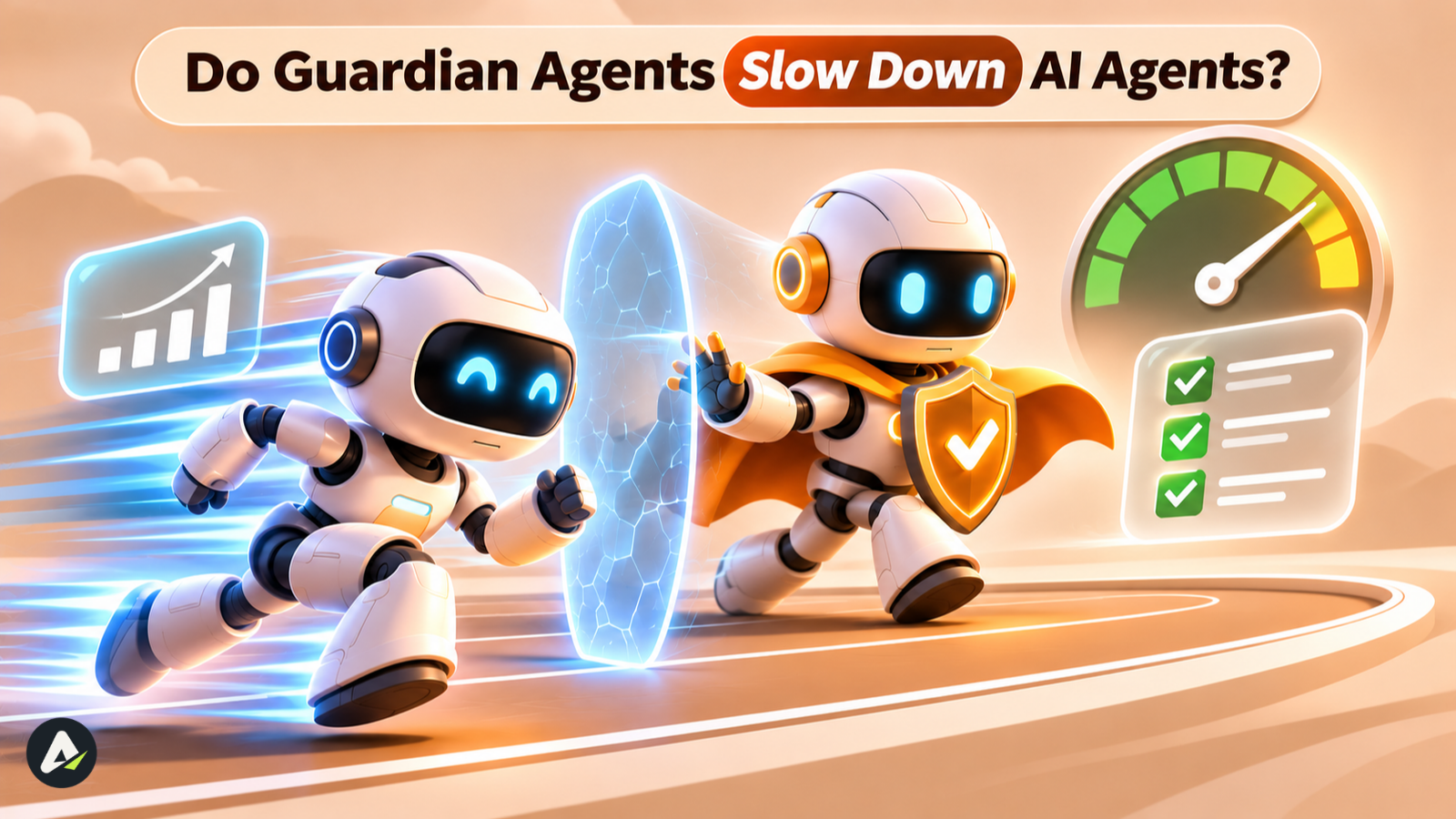
Yes. Guardian agents can introduce additional latency and costs, especially when they check every tool call before allowing an AI agent to proceed. If every action requires approval, the extra processing can undermine the speed advantage of autonomous agents. A better approach is selective interception: monitor high-risk operations such as payments, data transfers, permission changes, and external writes while allowing low-risk read operations to pass with minimal checks. LangChain’s human-in-the-loop middleware supports this approach by allowing teams to require approval for specific tools.
The performance difference between checking methods can be significant. Arize’s guardrail documentation estimates that an LLM judge can introduce 100 to 1,000 times more latency than a pattern match. Tianpan’s analysis suggests that a tiered guardrail setup can keep common-path overhead below 30 ms. At the same time, a full LLM-as-judge check can add hundreds of milliseconds and potentially cost as much as the generation it protects. It also estimates that a well-designed guardrail layer can account for less than a few percent of primary model spending. However, these figures describe guardrail systems, not guardian agents specifically, as public benchmarks for guardian-agent performance remain limited.
Consider an agent that makes 20 tool calls during a task. If an LLM judge evaluates every call and takes 300 ms per check, the additional delay reaches six seconds, along with 20 extra model calls. If deterministic checks handle 18 calls and only two require LLM evaluation, the additional checking time and model usage fall by approximately 90%, assuming similar evaluation costs per call.
Context size creates another performance challenge. If a model-based guardian repeatedly processes the entire conversation history, its input-token usage can grow significantly during longer tasks. Instead of resending the full transcript, teams can provide a compact action record, data-origin tags, and an updated summary of relevant events.
How Do Guardian Agents Work?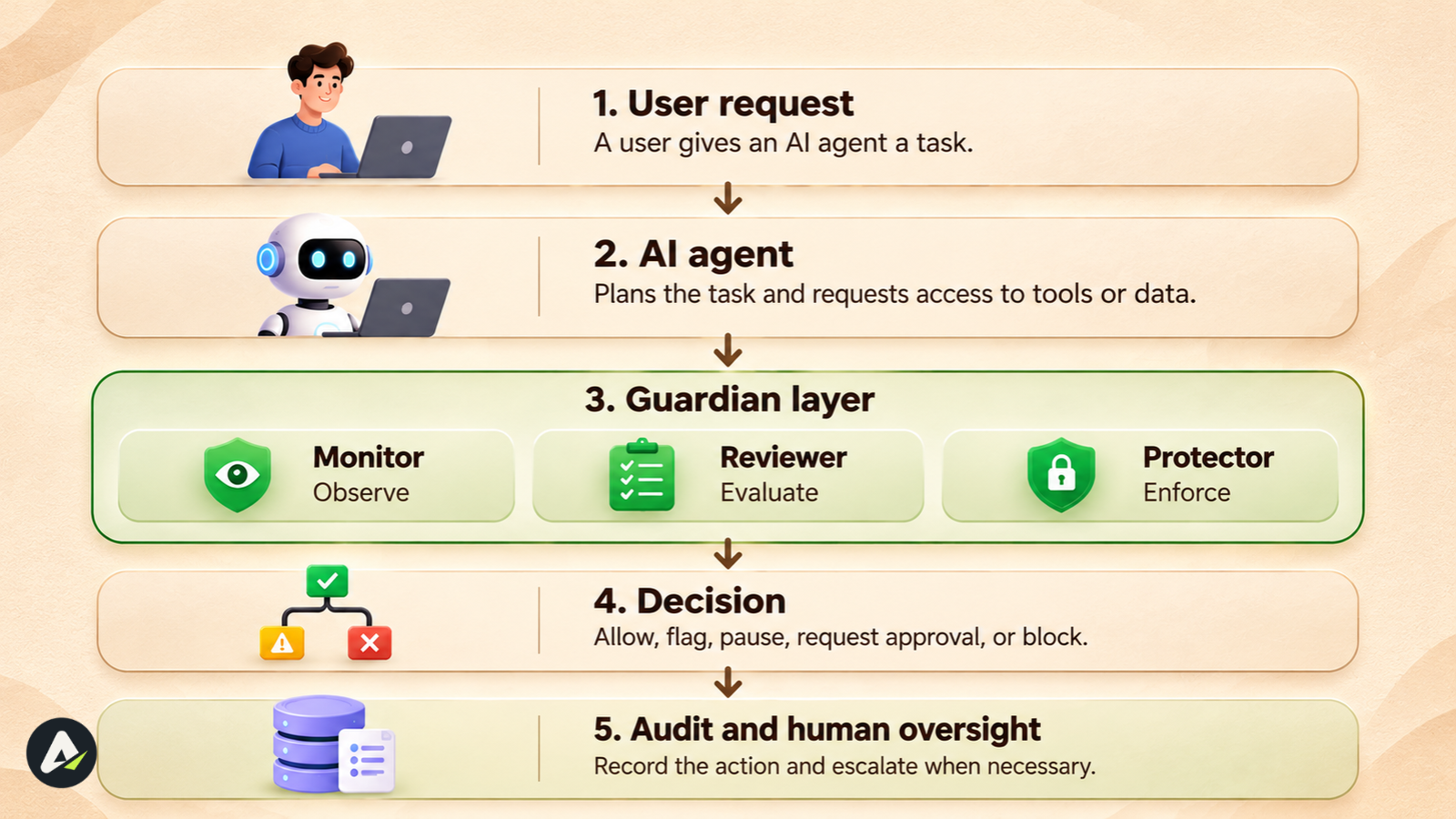
To keep guardian overhead manageable, organizations should:
- Run schema validation, allowlists, permission checks, and known injection-pattern detection before invoking an LLM judge.
- Send ambiguous or high-impact actions for deeper AI evaluation rather than checking every operation with a model.
- Enforce schema-constrained outputs through application code instead of relying solely on the guardian’s response.
- Set a latency budget for the guardian and regularly measure its processing time, token usage, and operating costs.
The goal is not to eliminate every delay. It is to apply stronger checks where the consequences of an unsafe action justify the additional time and expense.
Who Holds the Kill Switch?
A guardian needs the controls it enforces: its own identity, least-privilege access, and a kill switch that a human owns. Without them, one compromise hands an attacker every approval. The switch must live on a separate control plane, so the agent being stopped can’t disable it, reconfigure it, or outwait it. If an agent can write to its own supervising rules, the security model collapses. Platform vendors now sell identity and governance for agents for the same reason.
Dark Reading reports that experts fear agents policing agents may multiply risk instead of containing it. Keep the final decision in deterministic code, so a model advises and fixed logic decides. Then test the switch the way you test backups: trigger it on a schedule and confirm the agent really stops.
Can Guardian Agents Prevent Prompt Injection?
Not at the root. OpenAI has said prompt injection is unlikely to ever be fully “solved,” and the UK’s NCSC warned it may never be totally mitigated the way SQL injection can be. A guardrail limits what an injected instruction can make the agent do. It can’t promise the injection never lands.
Take an agent that reads an inbound email with an instruction hidden in white text. It proposes to attach a private contract and send it to an outside address. The guardian sees private data, untrusted content, and an external send in one action, pauses the send, and asks the account owner. The decision and its reason go into the audit log.
How Do Guardrails, Posture Tools and Guardians Differ?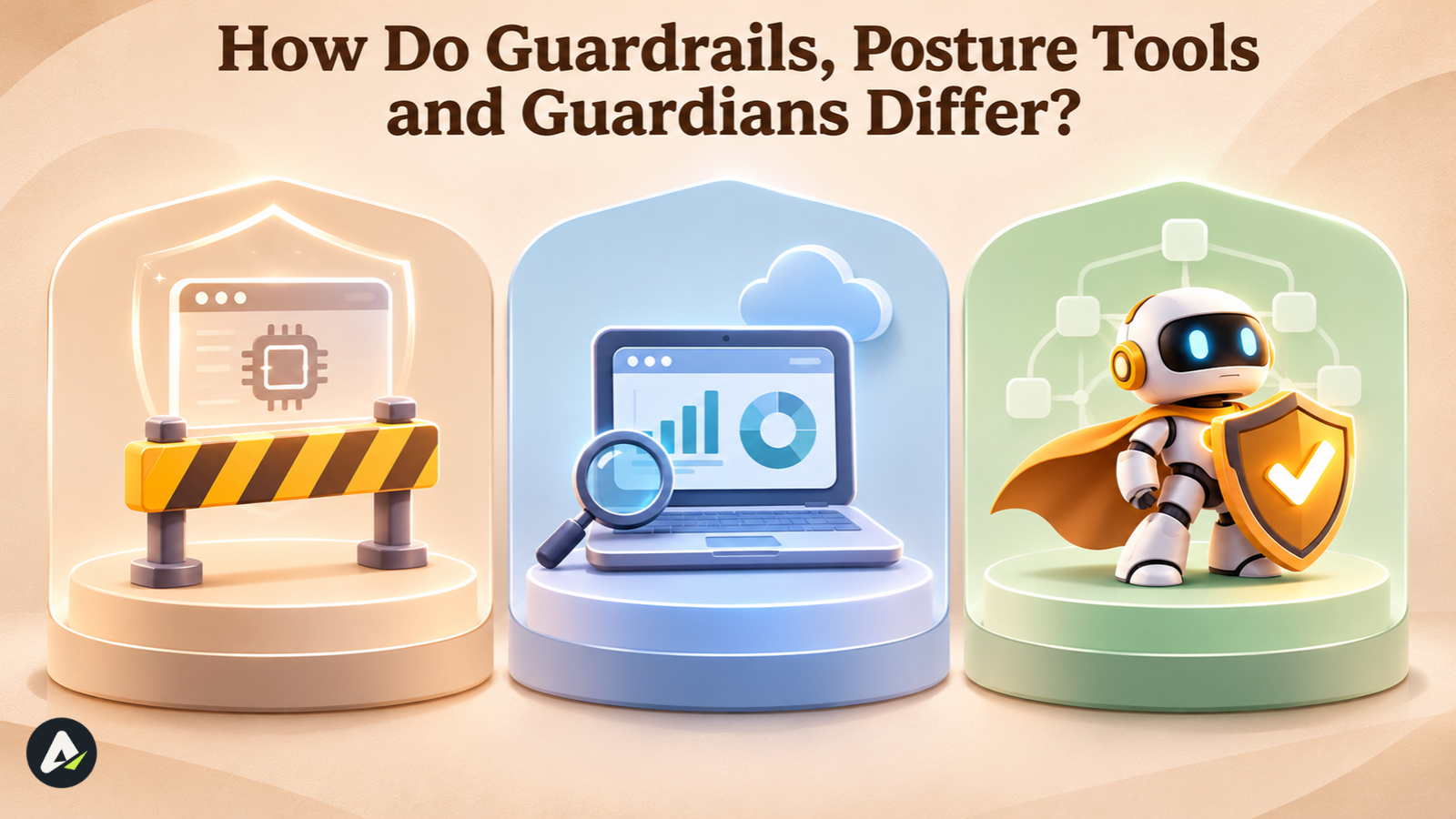
| Layer | Question it answers | Can it block an agent action? | Example technologies |
|---|---|---|---|
| Guardrails | Is this input or output acceptable? | Only text; input filters can miss attacks that hinge on meaning | NVIDIA NeMo Guardrails, Llama Guard |
| Posture management (AI-SPM) | Which agents exist, and how risky are they? | No; scores and logs gate nothing | Wiz, Microsoft Defender for Cloud |
| Identity and access (IAM) | What may this credential reach? | Yes, but not what the agent does within its rights | Okta, Microsoft Entra |
| Runtime security | Is this behavior safe on this host or network? | Yes, at the system boundary | Endpoint and network runtime protection |
| Guardian agent | Should this action happen, given policy and context? | Yes, when placed in the action’s path | LangGraph interrupts, Microsoft Project Perception, NeuralTrust |
What Do Gartner and Microsoft Say About Guardian Agents?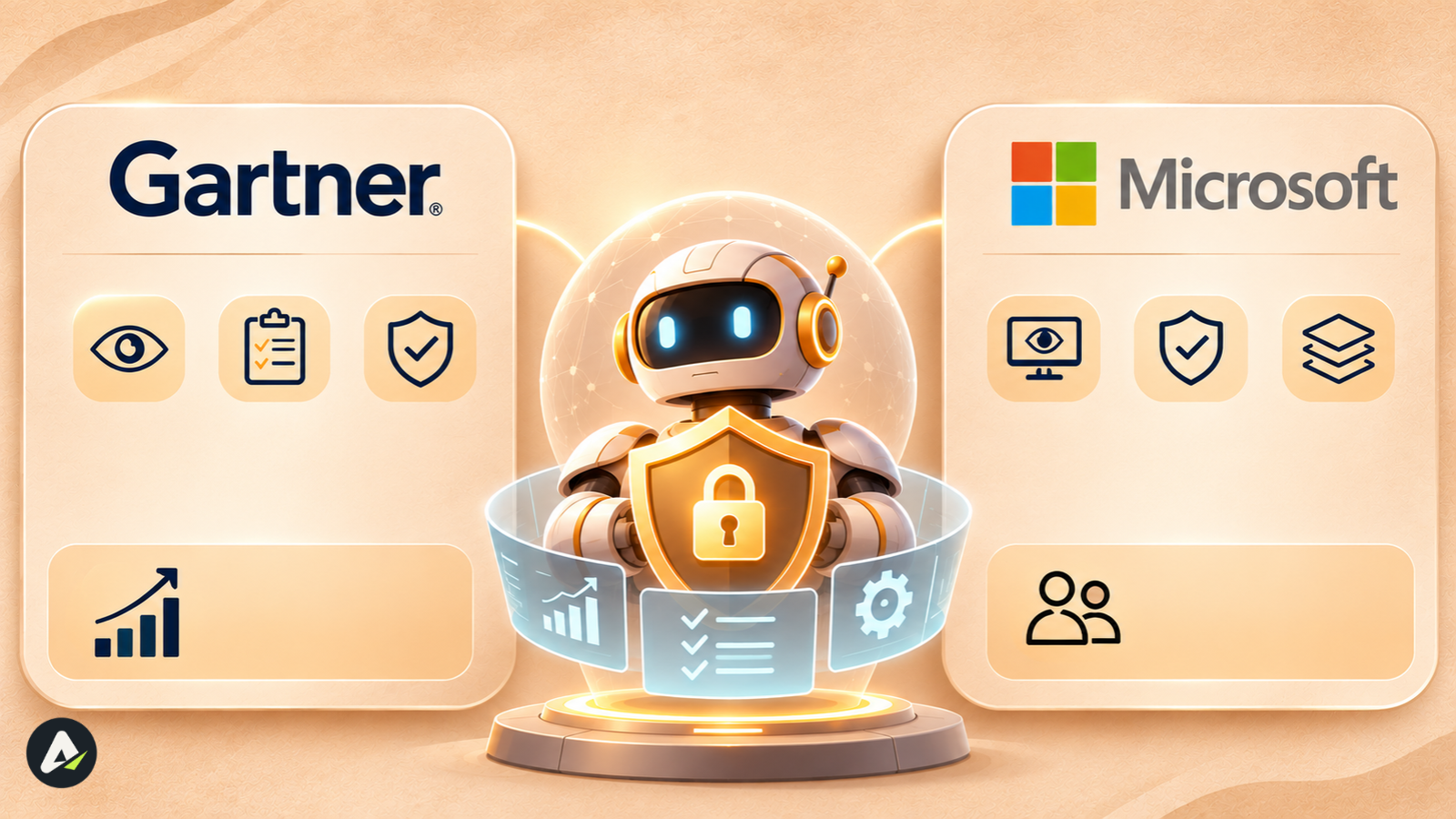
Gartner treats guardians as an emerging market. It predicts they will take at least 10% to 15% of agentic AI markets by 2030, and in February 2026 it published its first Market Guide for Guardian Agents to map the vendor field. The guide sits behind Gartner’s paywall, so the vendor detail below draws on published analyst and trade summaries of it.
Those summaries list three capability areas: visibility and traceability, continuous assurance and evaluation, and runtime inspection and enforcement. Companies named as representative vendors include NeuralTrust, PlainID, Orchid Security, Wayfound and AgilePoint. Gartner doesn’t rank or endorse them. The same summaries report Gartner arguing that independent guardians beat each platform’s own, because vendor safeguards stop at their own cloud borders. Independent vendors gain from that story, so test it against your own estate.
Microsoft took the platform route. On October 19, 2026, it added Guardian Agents to Project Perception. They evaluate each agent action before it executes and limit permissions when an agent strays. Its framing treats permissions as dynamic: temporary and task-scoped, with controls such as Dynamic Conditional Access that can block writes while still allowing reads. The three Microsoft names are easy to mix up:
| Product | What it is | Status |
|---|---|---|
| Agent 365 | Control plane to deploy, organize, and govern agents | Generally available May 1, 2026 |
| Project Perception | Security system built on red, blue, and green agent teams | Introduced July 2026; described as a preview |
| Guardian Agents | Supervision layer inside Project Perception, announced with Playbooks | Announced October 19, 2026; release stage not yet stated |
Native guardians cover their own platform best. Test a mixed estate, including agents on non-Microsoft frameworks, before you rely on one.
Do Guardian Agents Help With EU AI Act Compliance?
They supply evidence, not compliance. A guardian’s audit trail shows what an agent did and when a person stepped in, which supports the AI Act’s record-keeping duty (Article 12) and human-oversight duty (Article 14) for high-risk systems. Whether your agent counts as high-risk depends on its use.
The deadlines moved this year. The Digital Omnibus on AI, Regulation (EU) 2026/1744, entered into force on July 27, 2026. It moves stand-alone high-risk obligations (Annex III) from August 2, 2026 to December 2, 2027, and obligations for high-risk AI embedded in regulated products (Annex I) to August 2, 2028. Transparency duties still apply from August 2, 2026. Ask counsel which of these reach your agents.
How Do You Know a Guardian Works?
Measure what it stops, not what it logs. Run a labeled mix of benign and adversarial traffic through it and track:
- Enforcement success rate: the share of bad actions blocked before the side effect.
- Missed-action severity: how costly the misses are, not just how many.
- False positives: legitimate actions blocked or delayed.
- Added latency: delay per check, split by rule path and model path.
- Timeout behavior and recovery time: what happens when the guardian is slow, and how fast a paused agent returns to work.
How Should a Team Start?
- List your agents, including assistants that SaaS vendors switch on in an update, and what each can touch: tools, data, and credentials.
- Define normal for each one: its intended task, tools and data, so the guardian has a baseline to compare against.
- Rank actions by how hard they are to undo. Payments, permission changes, and external sends come first.
- Gate the top of that list, run the gate in shadow mode, then switch on enforcement.
- Give the guardian its own identity and a kill switch you have tested.
A guardian is only as good as what it knows. It needs a data classification that says what counts as sensitive, a named owner for each policy, and a behavioral baseline built from normal activity. Without them, it can’t tell an unusual download from a routine one.
Should You Build, Use Open Source or Buy?
| Option | Best when | Watch out for |
|---|---|---|
| Build gates in your agent code | One or two frameworks, few risky actions | You own testing, upkeep and coverage |
| Use open-source parts such as LangGraph interrupts or Arize Phoenix tracing | You want approvals and measurement without a vendor | Approval gates aren’t policy engines; you write the logic |
| Buy a guardian platform | Agents span several vendors and teams | Placement, failure behavior and independence claims need proof |
Whatever you buy, ask the vendor three things. How does the product behave when its own check fails? Which tools and local agents can’t it see? And what independent test results back its claims?
FAQs
Q. When Do Fixed Rules Stop Being Enough?
Rules fail when the right call depends on meaning or context, such as whether an email makes a promise the company can’t keep, or whether a run of harmless calls adds up to fraud. That is where a model judge or a supervising guardian becomes necessary. Until then, deterministic checks cost less and are easier to audit.
Q. Is “guardian agent” a Gartner term or a Microsoft term?
Both companies use it. This article uses the term for any supervising layer that intercepts agent actions at runtime, whichever vendor ships it. Gartner defined three guardian roles in June 2025 and published its Market Guide in February 2026. Microsoft added products under the name in October 2026.
Q. How does the human role change?
People stop reviewing every output. They handle escalated exceptions, set policy, and tune the thresholds that determine what gets escalated.
Q. Can I add a guardian without rewriting my agent?
Sometimes. Gateway and identity-layer controls can wrap an existing agent, but they carry the blind spots in the placement table. A gate inside the tool handler enforces best practices and needs code changes.
Q. Can a guardian catch a wrong answer, not just a harmful action?
That is the reviewer role in Gartner’s model: checking AI output for accuracy and acceptable use. It matters most where agents tend to tell people what they want to hear, a pattern covered in agreeable AI as a business risk.
Q. Is ChatGPT an example of agentic AI?
It depends on the mode. Ordinary chat is an assistant: it answers and waits. OpenAI introduced ChatGPT agent in July 2025, which browses, runs code and works through multi-step tasks, and that mode is agentic. It is the kind of system a guardian supervises.
Q. What Is the Difference Between AI Guardrails and Guardian Agents?
Guardrails check whether a single input or output is acceptable. A guardian agent decides whether an action should happen at all, using policy, session context, and data origin. Guardrails can feed a guardian, but they don’t replace one. The layer comparison table above sets out where each fits.
Related: AgentMan: Build Smarter Agents Without Coding?
| Disclaimer: This article is based on publicly available research, industry reports, and vendor documentation. Guardian agent capabilities and implementations may vary, and some emerging technologies and market predictions have not been independently verified. This content is for informational purposes only and does not constitute professional cybersecurity or legal advice. We are not affiliated with any companies or products mentioned. |

Kavin Reed
As AI agents move from experimental demos into everyday workflows, the questions around how they work, where they fit, and what happens when they fail are becoming harder to ignore. Kavin Reed writes about AI agents, automation, and the systems behind them, with a focus on practical adoption and real-world impact. His work examines the ideas, trends, and technical developments shaping how businesses and people use increasingly capable AI systems.
More from Kavin Reed →