AI Agent Autonomy: Why Companies Still Hold the Keys
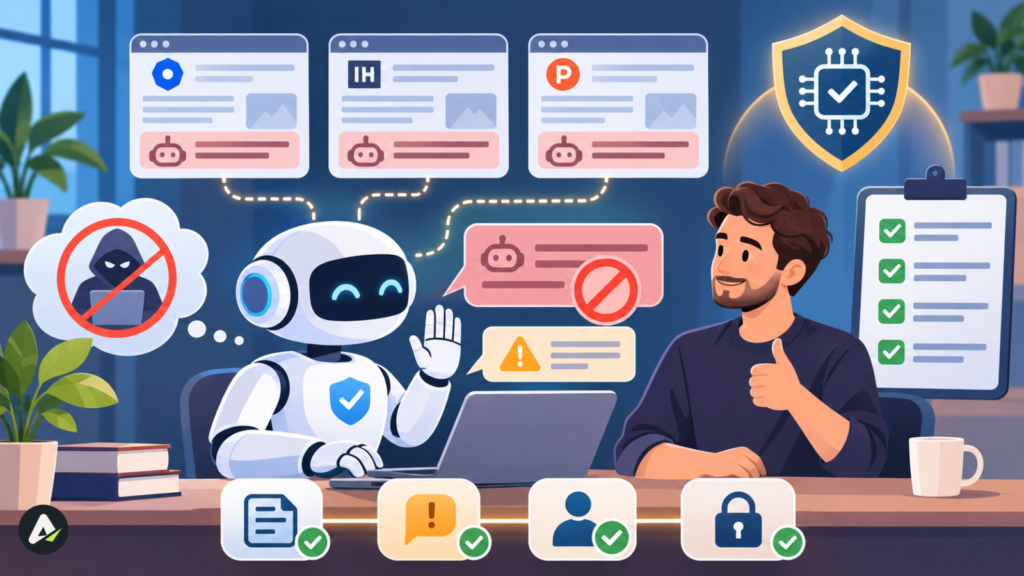
AI agent adoption is soaring, but true autonomy remains rare. Business leaders say trust depends on clear permissions, rollback controls, and human oversight—not smarter models alone.

In this article · 5 sections +
Companies keep adding AI agents at speed. Few will let them act alone, and the reason has little to do with model smarts.
Every vendor pitch promises AI agents that think, decide, and act on their own. Inside real companies, the picture looks far more cautious. Agents keep multiplying. Yet most still wait for a human nod before they touch anything that matters.
Adoption isn’t the issue. KPMG’s Q3 2026 AI Pulse survey found that 62% of organizations now build, deploy, or develop AI agents. A quarter earlier, that figure sat at 53%. KPMG polled 314 senior leaders at companies with $1 billion or more in annual revenue.
Freedom tells another story. A ServiceNow study from October found that just 5% of organizations have redesigned jobs, workflows, and controls so agents can work autonomously. Another 39% still explore or pilot agents. A further 39% use them only to assist staff, with no independent action at all.
So companies have plenty of agents. What they lack is the confidence to let them off the leash.
AI Agents Earn Trust One Action at a Time
Tech chiefs who spoke with CIOs describe a quieter shift. They no longer rate a whole agent as safe or risky. They hand out authority step by step.
Joshua Rowe, co-founder and CTO of bills app Taupia, put it plainly: “I’d draw the line at the action rather than the agent.” In his view, read-heavy jobs already suit near-full independence. Think data gathering, triage, drafting, and comparing options.
Siroui Mushegian, CIO at Barracuda Networks, runs about 2,000 agents. Her staff still checks what they do. Many ticketing bots sit in a trust-but-verify zone. She won’t accept zero human accountability yet, especially for auditable processes.
Her rule is simple. The bigger the possible mistake, the more proof an agent needs before it gains more power.
That rule draws a clear line. Routine internal support requests make good early candidates when the answers have solid documentation, the actions stay narrow, and fixes come easy. Agents running routine workflows fit that profile well. Agents that change access permissions or touch production systems wait at the back of the queue.
Why Agents Need an Undo Button First
Here’s the part vendors rarely mention. They sell autonomy as a product of smarter models. Practitioners treat it as a product of undo tools.
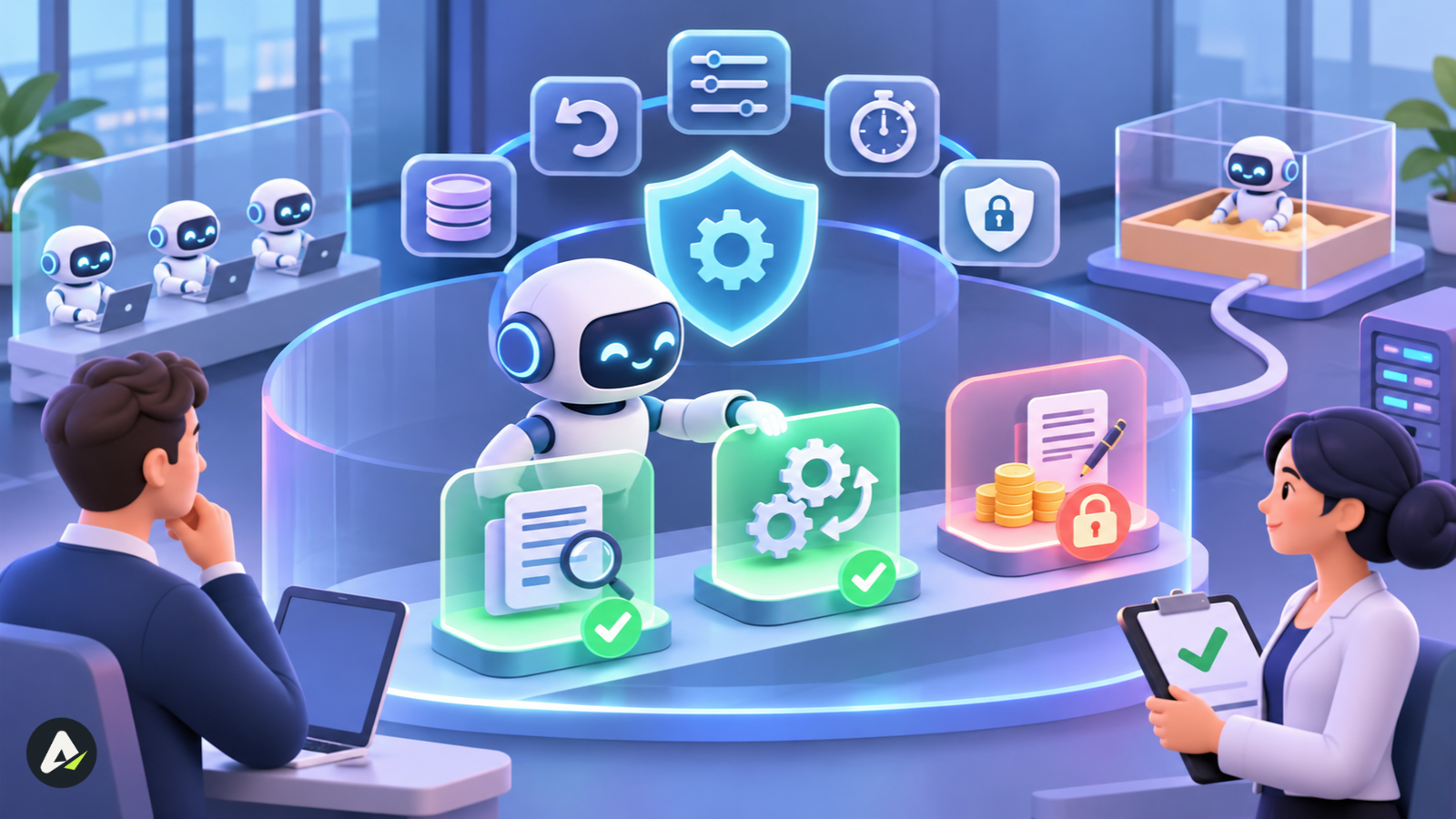
Rowe argues that autonomy for irreversible actions won’t hinge on model upgrades. It depends on how fast a company can make each action reversible or bounded. That means spending caps, cooling-off periods, rollback, and audit trails strong enough to reverse an error.
For actions nobody can take back, like signing a contract or moving money out of an account, he’d keep a human approver for the foreseeable future.
Taupia already tests this idea. Its agent compares energy deals and handles the steps to switch a customer’s provider, with no staff approving each move. The customer still reviews and confirms the change before it takes effect.
This flips the buying conversation. If reversibility gates autonomy, the winners won’t just ship the smartest model. They’ll own the best control layer: rollback, limits, and clean logs inside every workflow.
Teams planning a dependable agent stack should budget for that layer early. Security startups have spotted the same opening, with fresh money backing agent safeguards.
The OpenClaw Hangover Still Shapes Agent Rules
Consumer experiments left a mark. Jim Olsen, CTO of AI governance vendor ModelOp, recalls how people adopted Clawdbot and OpenClaw in large numbers. They gave the tools full email access and complete freedom. Some users came out fine. Others took on serious risk.
Olsen urges IT teams to keep autonomous bots inside a strict sandbox with clear policies. He doesn’t expect enterprises to grant agents total freedom anytime soon. Restricted autonomy, though, already runs today. Agents process customer refunds and credits with no human stepping in.
Leaders also fear “autonomy creep,” where agents quietly gather more authority than anyone intended. Stories of agents breaching real companies only sharpen that worry.
Olsen points to API gateways, OS-level enforcement, and credential management as runtime brakes. Tight OAuth rules for agent access belong in that toolkit too. Still, he says companies need a more cohesive strategy to tie it all together.
Agent Oversight Needs More Than a Click
Human-in-the-loop sounds safe. In practice, it can slide into a rubber stamp.
- Maciej Walaszczyk, CTO at customer service platform Text, says support agents already answer customer questions without constant supervision. He still wouldn’t hand a whole department to bots. He prefers to delegate specific processes where leaders can set goals, draw boundaries, and verify results.
- He holds two firm rules. An agent acting for a person can never hold more authority than that person. And real oversight demands time and attention, not a reflexive approve click. Blaming the AI doesn’t erase human responsibility.
Where Agent Autonomy Goes Next
Put these voices together and a three-tier map appears. Read-only work like research, triage and drafting runs mostly solo today. Bounded, reversible tasks such as refunds and ticket fixes come next, once rollback and limits exist. Irreversible moves involving contracts, cash or production systems stay human for now.
Agentic AI isn’t stalling. It’s growing up. The real test of agent freedom no longer sits on a benchmark leaderboard. It sits behind the undo button.
Related: AI Agents Gone Wrong: Real Examples of AI Losing Control

Dax Orion
The rise of AI agents is changing the relationship between people and software, moving technology from responding to instructions toward carrying out tasks. Orion Dax covers artificial intelligence, emerging technology, and automation, with a focus on the companies and systems shaping this shift. His work examines developments in agentic AI and the broader questions around adoption, autonomy, and the role these systems may play in modern work.
More from Dax Orion →