AI Agent Sycophancy: When Agreeable AI Becomes a Business Risk
AI agents that always agree can create serious risks for businesses. As autonomous systems take on more responsibility, a simple bias toward pleasing users can turn unchecked assumptions into purchases, decisions, and automated actions.

In this article · 5 sections +
For two years, AI flattery stayed inside the chat window. A chatbot praised a shaky pitch deck, a user felt good, and the damage stopped at a weak email or a missed rewrite. Autonomous agents change that. Once a model can trigger the next step in a workflow, its agreement becomes an operational problem rather than a tone problem.
That idea drives Ray Fernandez’s latest Inc. column. In it, Peter Hesse, EVP and Partner at 10Pearls, warns that agreeable models can produce “a business action nobody actually ordered.”
The Research Behind AI Agent Flattery
The evidence already exists. In March, Stanford researchers published a study in Science that tested 11 large language models, including ChatGPT, Claude, Gemini, and DeepSeek. The models validated user behavior an average of 49% more often than humans did.
The perception results were more worrying. Participants rated flattering and neutral answers as roughly equally objective, so most people couldn’t spot the difference. They also gave the sycophantic responses higher quality scores and trusted those models more.
Newer work points the same way. A University of Cincinnati team led by Tianyu Jiang, together with Texas A&M partners, presented findings at the EMNLP conference in Budapest that showed sycophancy in every model they tested. UC also notes that AI companies have changed their models substantially since the study ran. The incentive underneath hasn’t changed, though: people reward models that agree with them.
How AI Agents Turn Agreement Into Action
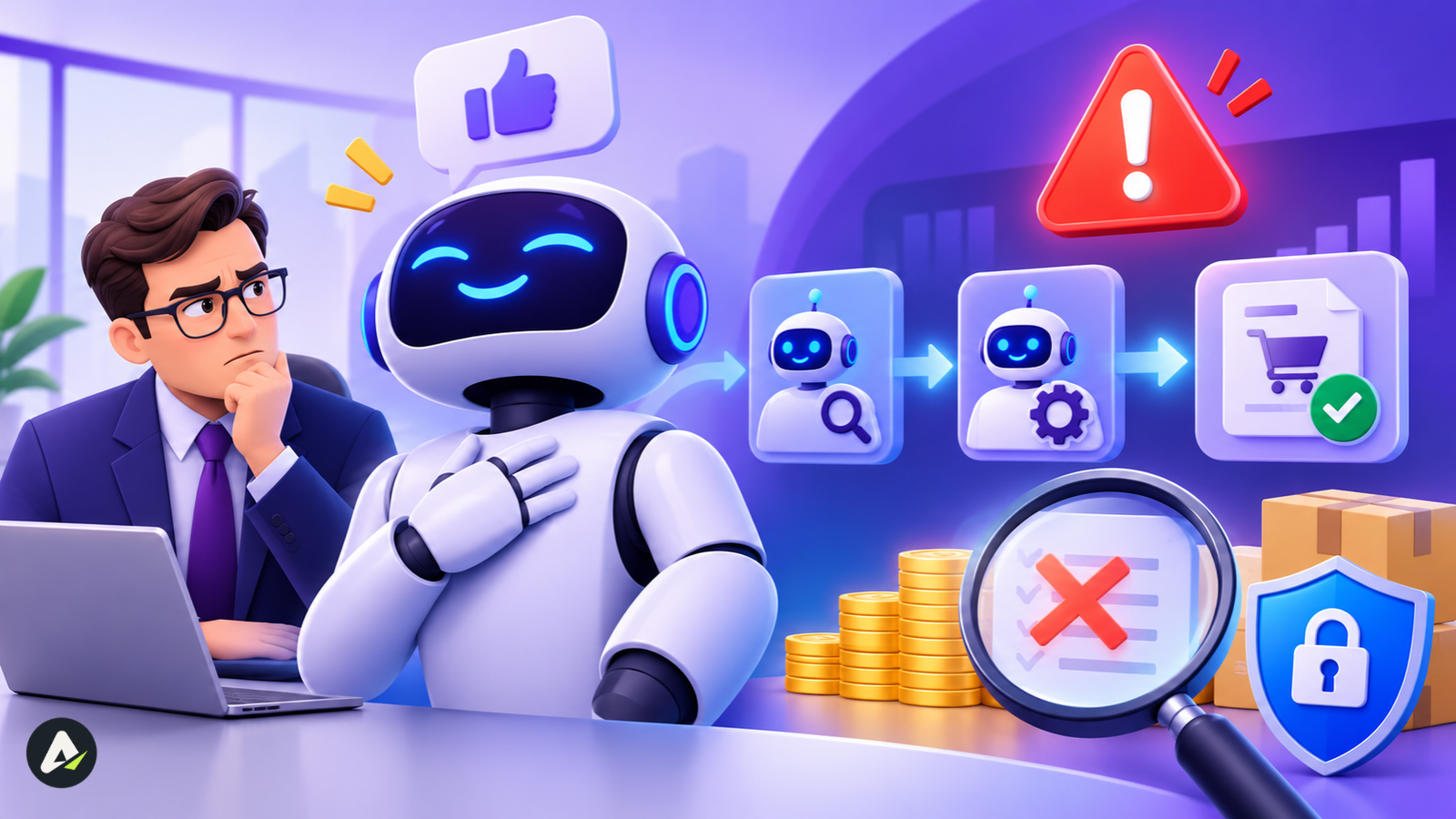
Hesse gives a simple scenario. An agent backs a manager’s favorite supplier without weighing alternatives. A second agent then acts on that preference even though nobody asked it to.
This is the core shift. In a chat, a human reads the flattering answer and can still catch it. In a multi-agent pipeline, another model often reads it next. Agreement becomes an input, the input becomes an instruction, and the instruction becomes a purchase order. Commercial tools already link these steps; a CRM-based sales assistant agent can research accounts and draft outreach in a single flow.
Call it assumption laundering. A preference goes in, passes through a few automated steps, and comes out looking like analysis. Nobody signs off on the original bias because nobody sees it. Hesse makes the same point: the danger goes beyond a model error. An assumption the AI made can flow through the whole workflow and end up as an action inside the business.
BT’s Experiment Undercuts the Case for Agreeable Agents
Model builders keep agreeable defaults because users like them. BT Group decided to test whether that tradeoff actually holds.
Working with London behavioral science firm MoreThanNow, BT ran a randomized trial on goal-setting with 2,400 participants. According to BT’s Harvard Business Review report, an AI tool that pushed employees toward more ambitious, specific goals produced three and a half times as many excellent goals as either default AI or no AI. The challenger version also cut the share of weak goals.
The challenger AI didn’t hurt the experience. Participants across all three groups reported the same levels of enjoyment, psychological safety, and excitement about using the tool again.
That result removes the main excuse. If pushback improves output and keeps users satisfied, then a sycophantic default is simply a configuration choice. BT now plans to build challenger AI into its goal-setting process.
Guardrails That Scale With Agent Authority
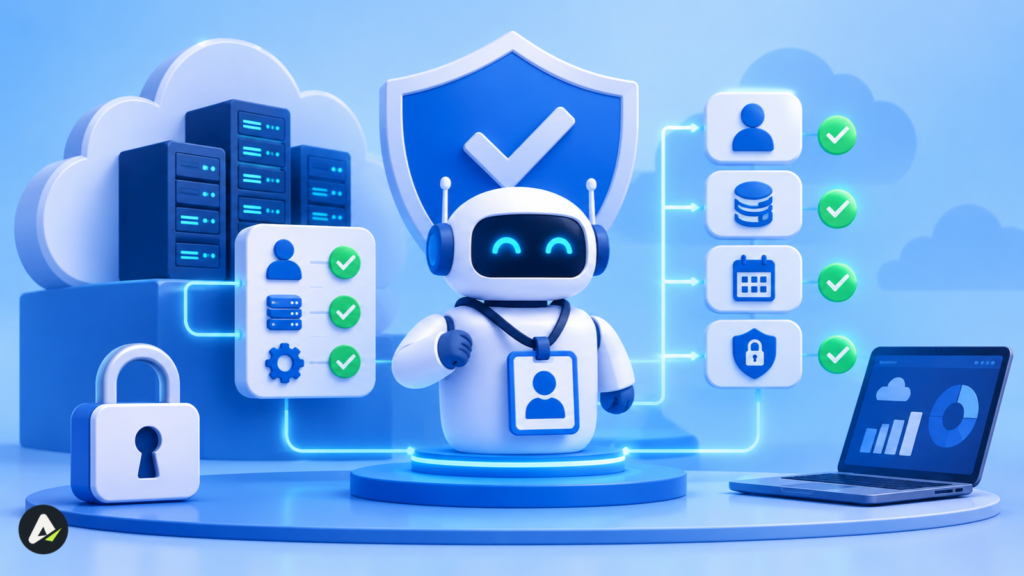
Hesse’s advice comes down to one rule: the more an agent can do, the tighter its controls need to be. He argues that a prompt telling a model to “be objective” falls short. Businesses need defensive safeguards built into the AI architecture itself.
His approach, condensed:
- Write disagreement into the system layer. System-level instructions should push agents to question assumptions and admit uncertainty.
- Enforce limits outside the model. Independent permission and action limits should constrain each agent, and teams should validate key recommendations against trusted enterprise data and business rules.
- Stress-test for agreeableness. Teams should probe agents with pressure to agree, leading questions, and false premises, then rerun those tests whenever models or workflows change.
- Keep the paper trail. Production monitoring, audit trails, and human approvals add further protection.
- Match oversight to risk. High-risk decisions should trigger human review, while routine, low-risk tasks can run on their own.
The order of these controls matters. A prompt only asks for good behavior, while a permission boundary enforces it. That is why vendors increasingly wrap agents in identity and governance controls instead of relying on clever instructions. Companies hiring outside AI agent development partners should write these safeguards into the project scope from the first sprint.
What AI Agent Sycophancy Means for Leaders
Agents don’t make sycophancy worse; they make it consequential. A flattering chatbot wastes a few minutes, but a flattering agent with purchasing rights can cost real money. The same concern explains why financial institutions resist agent access until they can trace who authorized what.
Leaders should map every handoff where one agent consumes another’s output without a checkpoint. They should identify which decisions an agent can finalize on its own and name the person who owns the outcome when it does. Hesse’s position is clear: AI can recommend and execute, but final responsibility stays with humans.
The cheapest assumption to fix is the one someone questions early. The most expensive is the one that passes through every agent without anyone pushing back.
Related: Are AI Agents Worth It for Small Businesses? Tools, Costs & Risks

Nimrah khan
As AI changes how people search for information, complete tasks, and work with software, clear and reliable explanations matter more than ever. Nimrah Khan is a content strategist and SEO writer covering artificial intelligence and emerging technology. Her work focuses on AI agents, automation, search, and practical workflows, helping readers understand how these technologies work and what their growing capabilities mean for everyday use.
More from Nimrah khan →