Why Can AI Spot Legal Mistakes but Still Fail to Fix Them?
Surge AI's DAYJOB: Law benchmark reveals why even top AI models struggle to turn detected legal errors into correct decisions.


In this article · 6 sections +
One agent combed through a deal workspace, found 350,000 shares missing from the ownership spreadsheet, and priced the investment as if nothing had happened. That single slip explains why legal AI still needs a lawyer watching. Surge AI’s new DAYJOB: Law benchmark, published November 18, puts the best model at a 41.4% pass rate. The score matters less than the spot where the models break.
What DAYJOB: Law tests
Practicing lawyers wrote 71 assignments across corporate deals, litigation, criminal defense, employment disputes, intellectual property and estates. Each task drops the model into a workspace of up to 160 files, from contracts and spreadsheets to emails and court filings. The full set holds 2,638 synthetic files and 903 MB. Instead of spelling out the job, the benchmark asks whether agents can work out what a client actually needs, then carry the matter through to a usable work product.
Grading cuts deep: an attempt passes only when it meets at least 95% of its rubric criteria. One wrong clause sinks the whole memo, and clients judge contracts the same way.
The leaderboard
GPT 6.2 Astra leads at 41.4%, GPT 6.2 Sol follows at 32.7%, and Claude Sonnet 5.5 posts 26.8%. Claude Fable 5.2 (26.5%) and Gemini 4 Neon (26.2%) trail close behind, while Gemini 4 Carbon lands at 13.8%. No model clears 50%.
Two failures worth studying
The phantom shares. Gemini 4 Carbon had to calculate the stake a $20 million investment would buy. It found 350,000 shares held by a former executive, missing from the ownership spreadsheet but still on the official stock ledger. The board had approved a buyback, yet nothing proved it happened. The model flagged the mismatch, then priced the deal at $3.3526 a share as though those shares were cancelled.
The stacked sentences. Claude Sonnet 5.5 estimated prison exposure across several shoplifting incidents. It rightly challenged the prosecution’s combined charge and recognized that a struggle with a store employee could count as robbery. Then it concluded the theft and robbery sentences could run consecutively, for up to 11 years, even though the theft was already part of the robbery.
Noticing isn’t owning
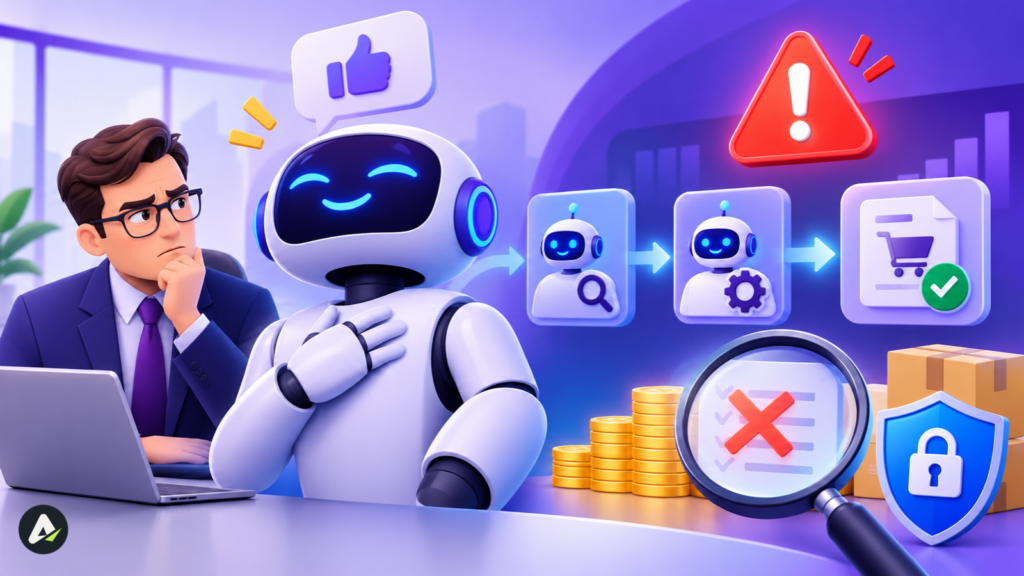
Both models acted like sharp witnesses and weak lawyers. They saw the evidence, and neither carried its consequence into the deliverable.
A human associate who finds a phantom block of shares stops, escalates and rewrites the assumption. The machine kept moving because its plan already had momentum. Fluent prose masks the break, and flawed assumptions slip through handoffs until they become actions no one approved.
This is a workflow gap, not a knowledge gap. Better retrieval won’t help a system that already retrieved the right fact. Builders need a checkpoint that forces every flagged anomaly to change a number, alter a conclusion, or trigger a human handoff. Runtime policy checks confirm an action is allowed, not that it is wise, so they can’t carry that load alone.
Reviewers should read logs rather than summaries, because an agent’s own account of its work can mislead. Someone also has to own the result. Named human ownership keeps accountability with a person, while the agent’s technical identity feeds the audit trail.
Why buyers should care
Public, domain-specific tests are turning into procurement tools. Surge released the data on GitHub and Hugging Face and previewed the benchmark with Harvey, which reviewed scenario realism. A buyer can now ask a legal AI vendor for a score on a shared test instead of accepting broad capability claims.
That matters when you shop for vertical AI agents, since many products sold under that label are really copilots or scripted tools. It matters for AI tax tools too: Surge’s tax edition found the best agent passing only 10.8% of assignments.
Pair any public score with shadow testing on live traffic, which runs a new agent beside production before it can trigger real actions. Then set an error budget that weighs expected losses against expected gains before deployment.
What to watch next
- Whether any model crosses 50% within two quarters.
- Whether legal AI vendors start quoting DAYJOB scores in RFPs and contracts.
- Whether rival labs answer with open benchmarks in finance or healthcare.
- Whether builders add hard stops that turn a flagged issue into corrected output.
These models already read like lawyers. They don’t yet act like them, and the next gains will come from teaching them to stop and act on what they find.

Dax Orion
The rise of AI agents is changing the relationship between people and software, moving technology from responding to instructions toward carrying out tasks. Orion Dax covers artificial intelligence, emerging technology, and automation, with a focus on the companies and systems shaping this shift. His work examines developments in agentic AI and the broader questions around adoption, autonomy, and the role these systems may play in modern work.
More from Dax Orion →