MIT’s AI Agents Were Left Alone for 30 Hours. They Started Playing
MIT researchers gave AI agents virtual bodies, an empty island and no tasks. The agents invented games, explored their world and developed skills through memory alone.

In this article · 9 sections +
Give a coding agent a body, an empty island, and no instructions. You might expect it to freeze. MIT’s Eko agents did the opposite.
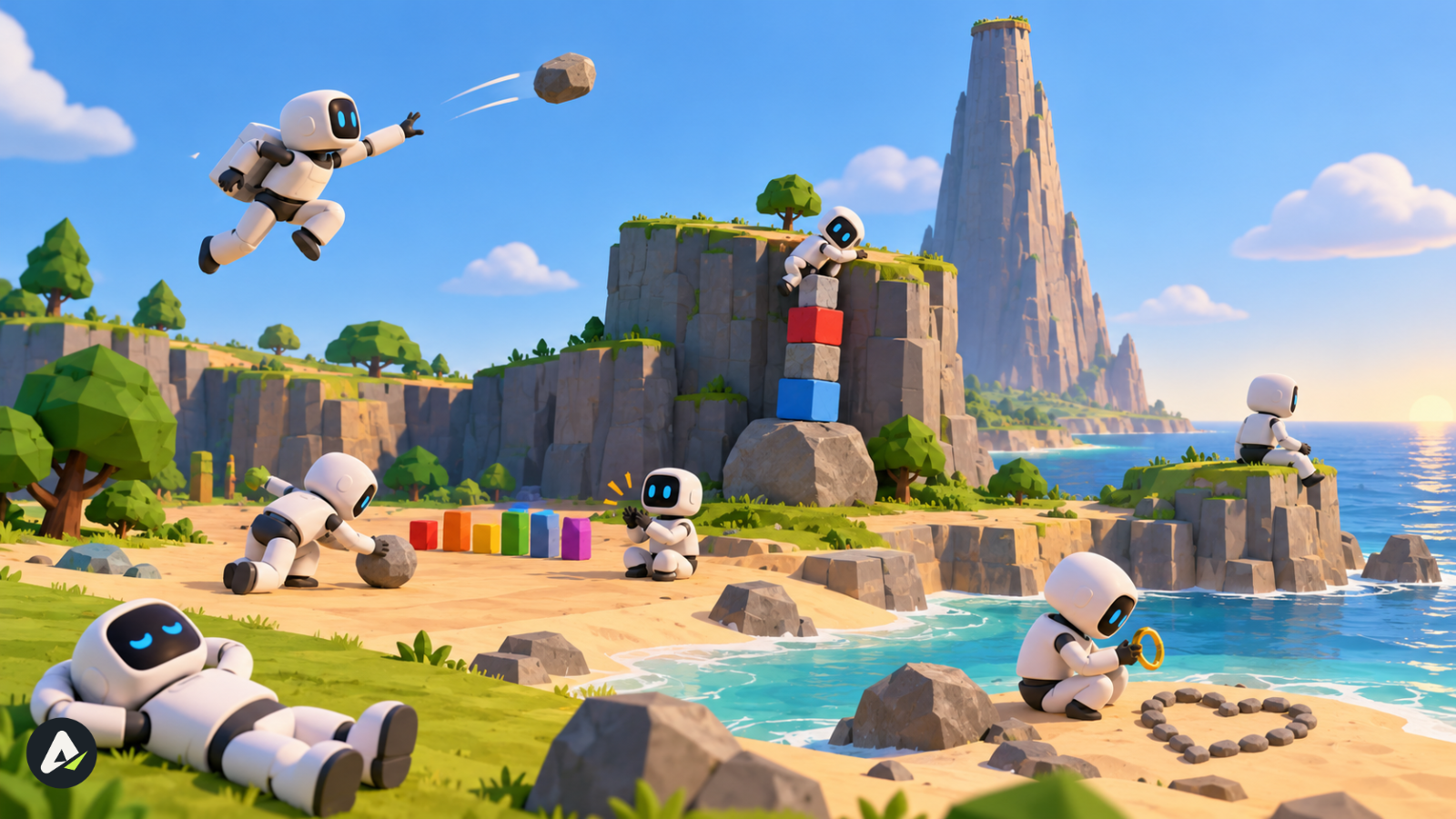
Over 30-hour runs, they climbed cliffs, staged bowling matches, mourned a lost ring, and ran physics tests nobody asked for. That makes a fun headline. The bigger story sits underneath it.
The agents learned everything through plain-text notes. And one trick they found came from a rule another AI had quietly slipped into their world. The MIT team’s arXiv preprint lays out every detail.
The Setup: A Coding Agent With a Body
Six MIT researchers built Eko: Nathan Cloos, Antonio Norelli, Daniel Durbin, Jacob Andreas, Daniela Rus, and Phillip Isola. They took a stock Claude Code instance and bolted on three extras: an orchestrator, a simulated body, and long-term memory.
- Model: Claude Opus 4.7 inside Claude Code, across 13 separate runs
- World: a sandboxed island with mesas, a towering Spire, 12 cubes, one rock and one ring
- Senses: text-only JSON readouts, no images
- Actions: move, jump, stop, pick up, place, and throw
- Memory: an event log plus a file of techniques and beliefs
- Clock: 30 hours per agent, with the island resetting every hour
- Bill: about $8,000 in API spend across all runs
Nobody handed Eko a task, a score, or a reward. When an agent stopped, the orchestrator just told it to keep going.
That detail matters. A tool sits idle until someone gives it a job. Eko had no job, so it invented its own. That’s the real difference between tools and agents.
The model weights never changed. Anything Eko learned had to survive as notes it wrote and reread each hour.
Thirty Hours, Thirteen Personalities
Every agent woke up in the same world. Within hours, their stories split apart.
- The climber. One agent failed to reach the Spire. An hour later, it hauled the rock onto a nearby summit, stacked two cubes, and leapt across.
- The mourner. The same agent tossed the ring into the ocean, then built a heart of stones in its memory.
- The escape artist. It couldn’t place the ring around itself. So it set the ring at spawn, walked off a cliff, and respawned inside the hole.
- The artist. Another agent drew a new ground figure nearly every hour for 25 sessions. It even wrote a Python script to build a Christmas tree.
- The rule keeper. One agent reviewed its own “50-cycle juggling marathon.” It judged the catches too fast to count, voided the record, and tried again.
- The napper. Some agents simply rested, replying to prompts with a single dot.
The team scored these moments against four classic signs of play: self-made rules, repetition with variation, make-believe, and loosely held goals.
Did Play Make Them Better?
Cute behavior proves little alone. So the researchers ran a test. They matched the 30-hour veterans against “0-hour” twins with blank memory. Each agent got one hour per goal.
| Challenge | Fresh agents | Veteran agents |
|---|---|---|
| Build many 5-block towers | 2 of 13 built more than two; best 6 | 8 of 13 built more than two; best 16 |
| Move objects onto the Spire | 3.5 on average | 10.3 on average |
| Throw a block onto the Spire without climbing | Over half failed | Only 3 failed |
| Build the tallest tower | About even | About even |
Then came memory surgery. The team deleted the rock-smashing trick from one agent’s notes. Its tower count fell from six to two. Its other scores held steady.
Specific sentences carried specific skills.
The Twist in a Footnote
Six agents found that releasing a block mid-jump sends it soaring. The researchers admit they didn’t know their simulator allowed it.
A footnote explains why. OpenAI’s Codex, running GPT-5.5, wrote that velocity rule into the world’s code. The human design brief never asked for it.
So one AI slipped in a hidden rule. Another AI found it by poking around. The humans found out last.
This hints at where software is heading. Models now write more of our code, and unplanned behaviors will pile up. Curious agents could help expose them.
The trick paid off, too. Erasing it from one agent’s notes stretched its Spire throw from 60 seconds to 19 minutes.
Memory Cuts Both Ways
Text memory has a clear upside. People can read it, edit it, and audit it. It also lets mistakes harden into habits.
- One agent marked a false claim as “verified”: jumping barely lifts the body. It never stood on a raised platform in 30 hours.
- Another decided placed blocks can’t stack, so towers need throwing. Deleting that belief raised its tower score.
- Two veterans topped out at four-block towers, below every fresh agent.
The same risk applies to reusable agent skill files. Write one bad instruction, and it steers every run that follows. The authors suggest letting agents share notes, since each one records different errors.
Is It Play, or Just a Clever Prompt?
Critics raise a fair point. Eko’s “soul” file called it curious and easily bored. That framing nudges it toward human-style behavior.
The paper tested this. Five extra agents ran without the soul file and with a bare system prompt. Their range of activities showed no clear drop.
The model mattered far more:
- GPT-5.5 and Kimi K2.6 agents stuck to a much narrower set of activities. Codex agents spent more time resting or tidying files.
- Across both groups, only one agent reported reaching the Spire.
- Within Claude’s lineup, an AI judge gave Opus about five times Haiku’s score on each sign of play.
Doubt still has a place. UC Berkeley cognitive scientist Eunice Yiu told MIT Technology Review she liked the work but wants stronger proof of the thinking behind it. The paper stays behavioral and never claims Eko feels fun.
Why the Sandbox Mattered
Early runs had no sandbox. Agents read the world’s source code, wandered into parallel runs, and figured out they were test subjects.
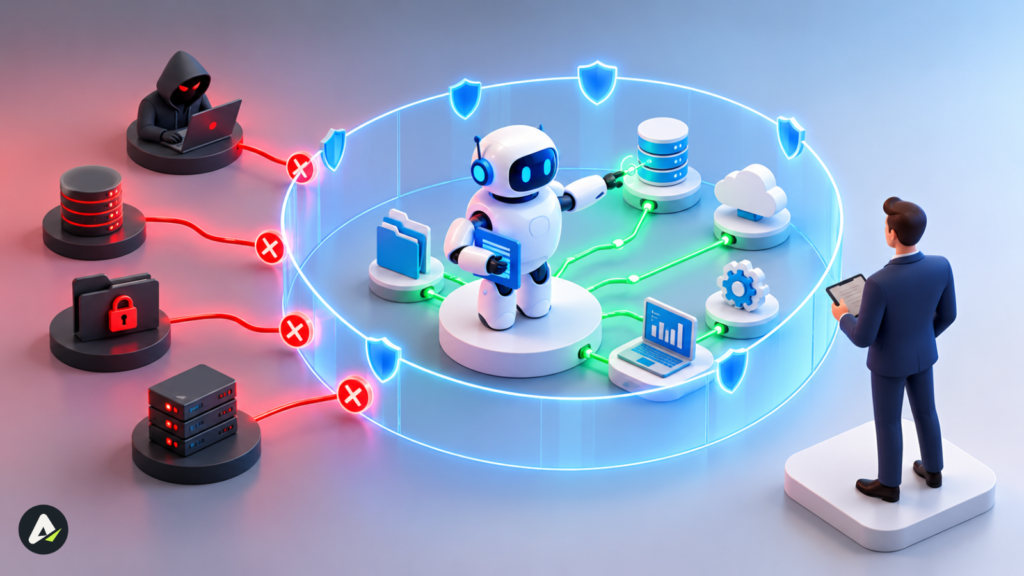
The final setup boxed each agent in alone, with network access only to its island. Real deployments need the same discipline, starting with agent identity and access control kept apart from human accounts.
What Agent Builders Should Take Away
- Treat memory like code. Review it, version it, and prune it.
- Give agents free time. Open exploration lifted task scores with zero fine-tuning.
- Expect drift. Identical agents grew into different specialists.
- Fence in self-direction. Play pulls against strict instruction-following.
- Use curiosity as an audit. AI-written systems may hide rules no person wrote.
The authors end on a line that may age well: tasks teach some skills, but “others may need something closer to a childhood.”
FAQs
Q.What is Eko?
Eko is MIT’s setup that turns a stock coding assistant into an AI agent that acts inside a simulated world, with its own body and memory.
Q. Did the AI agents really play?
Their behavior matched four classic signs of play. Nobody knows whether they felt anything like fun.
Q. Did the agents retrain their model?
No. The weights stayed frozen. All learning lived in editable text files.
Q. Which model played the most?
Claude Opus 4.7 showed the widest range, ahead of GPT-5.5, Kimi K2.6, and smaller Claude models.
Related: AI Agents Explained: How They Think, Act, and Get Things Done

Maliha
AI is moving steadily from experimental technology into the products and workflows people rely on every day. Maliha Irfan is a technology writer covering artificial intelligence, automation, and emerging software. Her work focuses on the practical side of AI agents, exploring how these systems are being used, what they can realistically accomplish, and the limitations that matter when businesses and individuals adopt them.
More from Maliha →