Can AI Coding Agents Teach Students While They Build Software?
A guided learning loop turns AI coding agents into tutors, helping students build, verify, understand, and apply programming concepts without sacrificing critical thinking.


In this article · 6 sections +
The names for working with coding agents change faster than course catalogs can print them. One CACM blogger who teaches agent-built software lists the churn. First came vibe coding. Now people say agentic engineering, and maybe agentic development engineering.
Agent Labels Shift, the Classroom Problem Stays
Each new term moves attention away from typing every line and toward directing a system that produces, tests, and revises software. Simon Willison ties the idea to building software with coding agents, tools like Claude Code and OpenAI Codex that generate code, run it, and iterate.
The post doesn’t chase the best label. It asks what students must understand when agents do much of the construction.
Agent Output Demands a Student Who Can Read It
The author wants students to feel on top of things while they vibe code. That means understanding debugging, testing, and responsibility for information and LLM costs.
The argument leans on earlier work. Yael Erez and Orit Hazzan say these tools can pull attention from syntax toward problem formulation and decomposition. Two recent CACM pieces push on accountability. One calls for verification and interpretability in AI-generated software. The other wants intro courses to teach responsibility for AI-produced work. The blogger takes the next step and asks how students can practice that responsibility mid-build.
The Agent Loop That Teaches Back
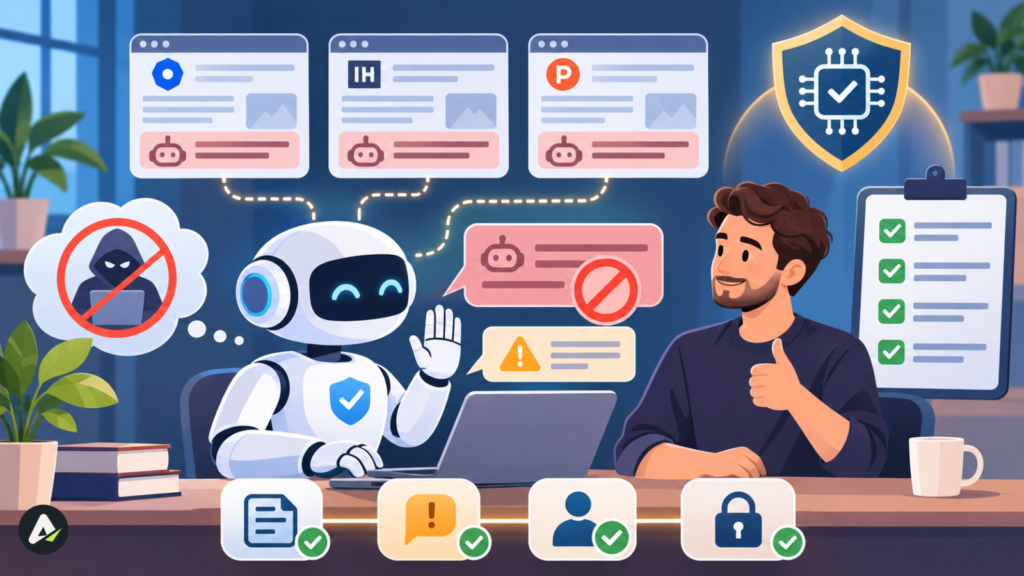
Students build, verify, pick one unfamiliar term, study it, and apply it in the next step.
The twist is where the vocabulary comes from. After each development step, students have the agent run a custom instruction that summarizes the technical terms and concepts that came up. The builder doubles as the glossary. Students also set the pace, since they don’t have to study every unfamiliar term at once.
Delegation raises the same stakes outside the classroom. Anyone running subagents in parallel threads has to review every summary and diff before accepting the work.
Agent Honesty Belongs on the Syllabus
The glossary comes from the same system that wrote the code, so students should treat it as a claim and test it. An agent built to please can turn flawed assumptions into real actions, and unchallenged errors slip through workflows unnoticed. A beginner who asks “does this make sense?” invites exactly that kind of agreement.
Agent Accountability, Tested at Brown
Brown University’s Agentic Studio ran into the same tension this spring. About 20 students enrolled out of roughly 80 applicants. Student Advay Bajaj noticed that the agent’s code frequently worked but was poorly optimized and hard to extend. Instructors answered with code reviews where students had to explain and defend their decisions.
What Agent Literacy Looks Like Next
Naming a concept lets a student aim an agent more precisely and catch its slips sooner. Verification can’t wait for a final exam, either. In a legal benchmark, agents that spot problems still fail to act on them, so reviewers need to read logs instead of summaries. Cost awareness completes the picture, because LLM spend sits right beside debugging in the author’s list.
The vocabulary will keep moving. The habit this loop builds is easier to hold onto: ask the agent what it just did, then decide what to study.
Related: How Can You Monitor Knowledge Base Drift and AI Agent Calibration?

Sebastian Vale
As AI becomes part of the software people use every day, understanding how these systems perform outside controlled demonstrations is becoming increasingly important. Sebastian Vale is a technology writer covering artificial intelligence, automation, and emerging software. His work focuses on AI agents and the systems that support them, examining their capabilities, practical applications, and limitations as they move into real-world workflows.
More from Sebastian Vale →