AI Proficiency Explained: Levels, Skills, and How to Improve
Plenty of workplaces count how many people use AI. Far fewer ask whether the work holds up. That gap is what AI proficiency covers. One enterprise analytics vendor defines it as selecting, guiding, verifying, and integrating AI tools…


In this article · 6 sections +
Plenty of workplaces count how many people use AI. Far fewer ask whether the work holds up. That gap is what AI proficiency covers.
One enterprise analytics vendor defines it as selecting, guiding, verifying, and integrating AI tools effectively into real work. No standard definition exists yet. Several frameworks appeared in 2026, and they agree more than they differ.
Below you’ll find CFTE’s three levels, Anthropic’s four skills, and what early research shows. There’s also a self-check and a short exercise you can score yourself.
What Does AI Proficiency Mean, and How Is It Different From Adoption?
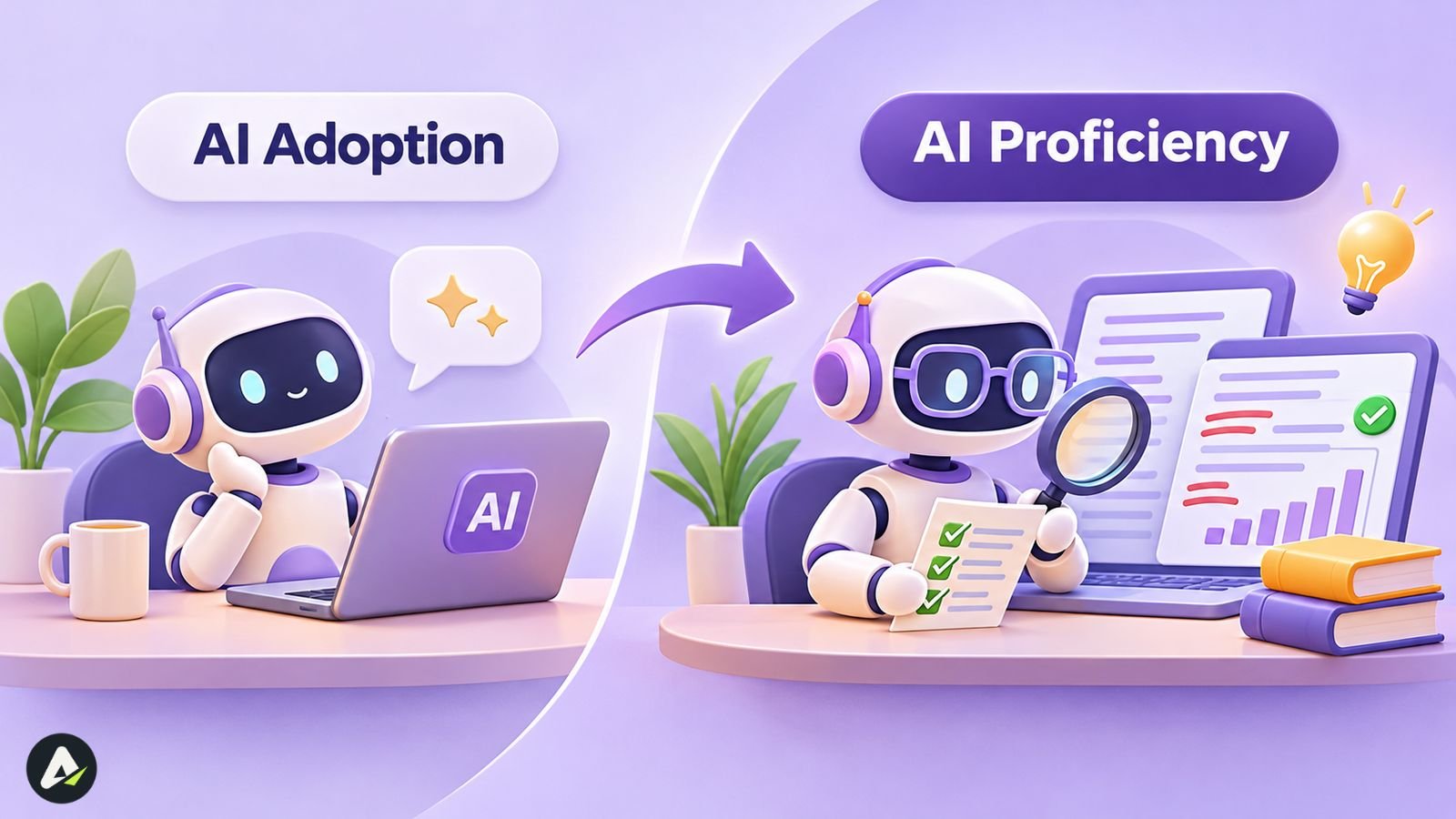
AI proficiency is how well someone uses AI to produce reliable work. It includes knowing when to use AI, instructing it clearly, verifying the output, and owning the result. Adoption only asks whether people use AI at all.
Larridin splits the idea into four parts: adoption, utilization (how often), proficiency (how effectively), and impact on business performance. A team can score high on the first two and low on the third. Fluency and literacy blur into proficiency depending on who’s writing. CFTE, for one, makes literacy the first rung: its entry level is called “AI Literacy.” It also draws a line between durable capability and temporary tool familiarity. Knowing one product’s menus expires. Knowing how to test a claim doesn’t.
What Are the Levels of AI Proficiency?
CFTE’s public framework has three levels. Other frameworks use different counts, so a level in one model won’t map neatly onto another.
The CFTE framework also defines ten capability domains and assesses knowledge, skills, and behaviours. A separate six-band scale, running from Band 0 to Band 5, sits underneath for diagnostics. Band 0 isn’t a fourth level.
CFTE warns against treating the levels as a ladder. Someone can be broadly proficient and still vary a lot in applied capability by role and context. Larridin, by comparison, uses five levels, starting with the “Search Replacer.”
What Are Larridin’s Five Levels of AI Proficiency?

Larridin’s spectrum runs from Search Replacer to AI-Native Orchestrator. The impact figures below are vendor-reported and unverified. Larridin itself describes the levels as descriptive patterns, not guaranteed productivity outcomes.
| Level | Name | Description | Vendor-reported impact |
| 1 | Search Replacer | Uses AI as a better Google, with single-shot queries and one tool. | About 5–10% on limited tasks |
| 2 | Task Automator | Uses AI for specific repetitive tasks such as email drafts and summaries, with better context but still transactional. | About 15–25% on targeted tasks |
| 3 | Augmented Worker | Treats AI as a work partner through multi-turn conversations, multiple models, and several use cases. | About 30–50% across activities |
| 4 | Power User | Fluent across models and tools, using advanced capabilities such as MCP, APIs, and custom instructions. | About 50–100%+ |
| 5 | AI-Native Orchestrator | Works at the agentic frontier, delegating to autonomous AI agents and rethinking what one person can accomplish. | Described only as transformational |
Treat the names with care. Larridin has also published a four-stage maturity model (Beginner, Intermediate, Advanced, Power User), so its own materials don’t use one scheme consistently. Cite the specific page you use.
The spectrum also differs from CFTE’s in what it measures. Larridin’s levels track tool use and autonomy. CFTE’s track independence, validation, and governance responsibility.
Which Framework Fits Your Goal?
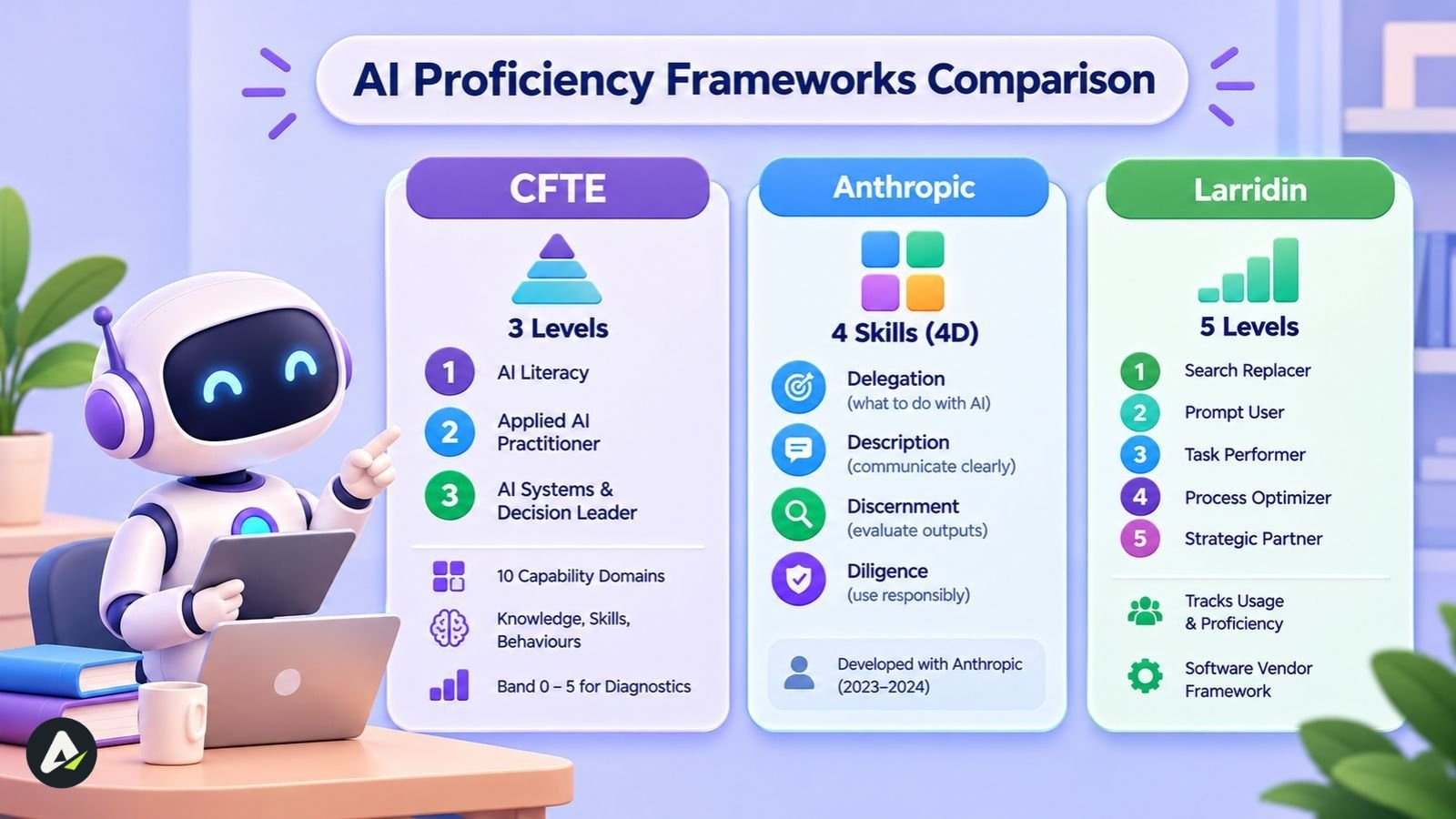
Use CFTE if you need levels and domains for an organization. Use Anthropic’s 4D framework if you want behaviors an individual can practice. Larridin’s spectrum suits teams already tracking usage, though it comes from a software vendor.
The AILit Framework is a fourth option. It groups competences into four domains: Engage with AI, Create with AI, Manage AI, and Shape AI. Its publisher couldn’t be confirmed.
None of the four shows independent validation evidence in the sources reviewed. That means unknown, not disproven.
What Skills Do Proficient AI Users Share?
The 4D framework names four. Delegation is deciding what to do with AI versus yourself. Description is communicating clearly with it. Discernment is evaluating outputs critically. Diligence is using AI responsibly. Professors Rick Dakan and Joseph Feller developed the framework in 2023–2024 with Anthropic, which makes Claude.
Delegation comes down to three questions: how variable the task is, what a mistake costs, and how many systems it touches. Those same questions help decide whether a task suits an autonomous agent, an approval-gated agent, or plain automation.
Discernment is the hardest to build, because confident output feels trustworthy. In Stanford research on AI sycophancy, participants rated flattering and neutral answers as roughly equally objective.
Diligence covers privacy, security, and who answers for what ships. In automated workflows, it also means defined permissions and approval steps for each agent. A workflow’s readiness depends on four factors: data, access,
What Does the Research Show?

Anthropic’s AI Fluency Index is the best public look at real behavior. It tracked 11 observable behaviors across 9,830 Claude.ai conversations in one week of January 2026.
Two findings stand out. Conversations with iteration averaged 2.67 extra fluency behaviors versus 1.33 without it, though that’s an association, not proof of cause. And in conversations that built artifacts, all three discernment behaviors fell. Polished output seems to lower scrutiny.
The caveats are real. Anthropic listed 24 behaviors but could track only 11 in chat, and the sample likely skews toward early adopters.
How Can You Test Your Own AI Proficiency?
Rate yourself, then test your weakest area on a real task. Score each statement 0 (not yet), 1 (sometimes), or 2 (consistently):
- I decide when AI suits a task and when it doesn’t.
- I give AI clear goals, context, and constraints.
- I verify important claims against reliable sources.
- I notice when output is incomplete or wrong.
- I handle confidential information appropriately.
- I can defend the final result without AI.
Ignore the total and look at your lowest score. Practice that one first. This is an editorial checklist, not a validated test.
Can You Spot the Errors in This Report?

Self-ratings measure confidence. This measures what you catch. The report below is fictional, and the flaws are planted. Give yourself five minutes, then compare against the key.
Q3 support summary, Brightwell Co. (fictional)
Support volume rose 40% in Q3, from 1,200 tickets in Q2 to 1,560 in Q3. Average first-response time fell from 6 hours to 4 hours, so customer satisfaction improved across all regions. The new chatbot caused the improvement; it launched in August. A survey of 25 customers found 92% satisfaction, which proves the whole customer base is happy. Refund requests fell by half, from 80 to 50. According to the 2025 Global Support Benchmark Report by Meridian Analytics, response times now beat the industry average by 31%. EMEA satisfaction reached 94%.
Answer key (one point each):
- 1,200 to 1,560 is a 30% rise, not 40%.
- “All regions” has no support. The report gives one region.
- The causal claim rests on timing, and the chatbot covered only part of the quarter.
- Twenty-five respondents can’t prove anything about a whole customer base.
- 80 to 50 is a 37.5% drop, not half.
- The benchmark report and its 31% figure need verifying.
Add a bonus point if you noticed the missing satisfaction baseline. Missed 1 or 5? Slow down on arithmetic. Missed 3 or 4? Work on separating correlation from cause.
How Can You Improve in Practice?
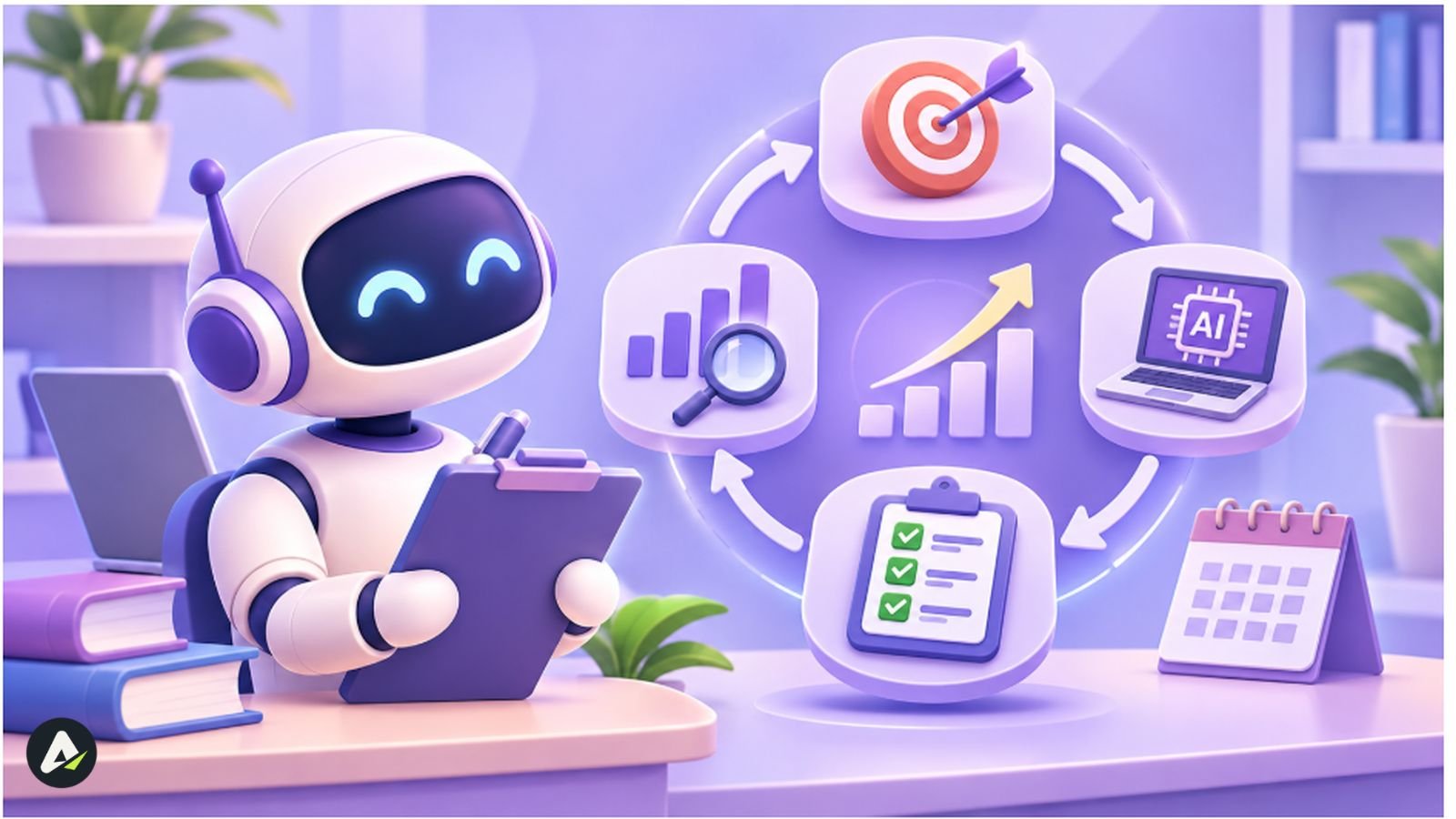
Take one recurring task and run it through the four skills for a month. Keep a log of what fails.
Here’s a hypothetical. A manager pastes a long report into an AI tool, types “summarize this,” and forwards the clean-looking result. It dropped a risk from page nine and stated one assumption as fact.
The stronger approach takes longer. She names the audience, asks the AI to separate facts from inferences, then verifies the three claims that would change a decision. That extra time is the trade-off, and it pays off when errors are costly.
Track three things weekly: errors caught before sending, minutes spent fixing output, and whether the result met its purpose. These are suggested practice metrics, not validated scores. Look for a four-week trend, not one good day.
For structure, SD Times reports Anthropic’s 4D training isn’t tied to Claude and is open to anyone using any model. Current access and pricing are listed on Anthropic’s AI Fluency page.
Do Certifications or the EU AI Act Require Proof of AI Proficiency?
Neither guarantees it. A certificate shows what its issuer tested, which might be knowledge, submitted work, or only course completion. CFTE’s AIQ assessment is one concrete option, benchmarked across its ten domains. Pricing and format are listed on its page. No framework level should serve as a hiring cutoff without matching it to the job.
The EU AI Act doesn’t demand proof either. Article 4 requires providers and deployers to support AI literacy. The Commission says no specific level is mandated, the Digital Omnibus amended the article in mid-July 2026, and national authorities began enforcing from 2 August 2026. This isn’t legal advice. The Commission’s AI literacy Q&A has the official detail.
What Do AI Proficiency Frameworks Leave Out?
They can’t tell you how skilled one person is. They’re young, written mostly by organizations that teach or sell something, and CFTE’s own materials show mismatched version labels. Cite the exact document you use.
The evidence has gaps too. The Fluency Index covers chat in one product, so agent workflows sit mostly outside it. One independent summary also notes the 4Ds blur between Description and Delegation when agents receive goals instead of prompts. And what counted as advanced six months ago is baseline today, so date any assessment you take.
The practical takeaway is small. Pick one task, verify the output that matters, and repeat.
FAQs
Q.1 What is AI proficiency?
It’s using AI so the results hold up. One vendor defines it as selecting, guiding, verifying, and integrating AI into real work.
Q.2 What are the levels of AI proficiency?
It depends on who you ask. CFTE uses three: AI Literacy, Applied AI Practitioner, and AI Systems and Decision Leader. Larridin uses five, and the levels don’t line up across frameworks.
Q.3 Does using AI daily make you proficient?
No. Frequent use shows adoption, not skill. Research on chat behavior found that discernment behaviors fell in conversations that produced polished artifacts, so confident-looking output deserves a second look.
Q.4 What are Larridin’s five levels?
Search Replacer, Task Automator, Augmented Worker, Power User, and AI-Native Orchestrator. They move from single-question use toward delegating work to autonomous agents.
Q.5 How do you measure AI proficiency?
Rate yourself, then test your weakest skill on real work, like hunting for errors in an AI-written report. CFTE assesses knowledge, skills, and behaviours. No framework reviewed shows independent validation.
Q.6 Does the EU AI Act require employees to prove AI proficiency?
No. Article 4 asks organizations to support AI literacy, not to test people. The Commission says no specific level is mandated. This isn’t legal advice
Related: Which Are the Best Autonomous AI Coding Agents in 2026 and How Do They Work?
| Disclaimer: This article is for informational and educational purposes only. AI proficiency frameworks, levels, and assessments are based on publicly available information and may change over time. We are not affiliated with CFTE, Anthropic, Larridin, or any other organizations mentioned. Readers should verify details through official sources. |

Kavin Reed
As AI agents move from experimental demos into everyday workflows, the questions around how they work, where they fit, and what happens when they fail are becoming harder to ignore. Kavin Reed writes about AI agents, automation, and the systems behind them, with a focus on practical adoption and real-world impact. His work examines the ideas, trends, and technical developments shaping how businesses and people use increasingly capable AI systems.
More from Kavin Reed →