How to Design an Autonomous AI Marketing Agent Workflow
Learn how to design autonomous AI marketing agent workflows that balance automation, human oversight, operational costs, and measurable business outcomes.

In this article · 14 sections +
- What Is an Autonomous AI Marketing Agent Workflow?
- Do autonomous marketing agents exist today?
- Which Marketing Tasks Actually Need Agents?
- How Do You Design an AI Agent Workflow?
- Which design patterns do marketing workflows use?
- Can agentic AI plan multi-step workflows?
- What Does a Complete Marketing Agent Look Like?
- How Do You Choose a Platform?
- What Are the Four Levels of Marketing Agent Autonomy?
- Do Agents Cost Less Than Workflows?
- How Do You Stop an Autonomous Marketing Agent From Going Wrong?
- What compliance rules apply?
- How Do You Test and Measure Agent Performance?
- FAQs
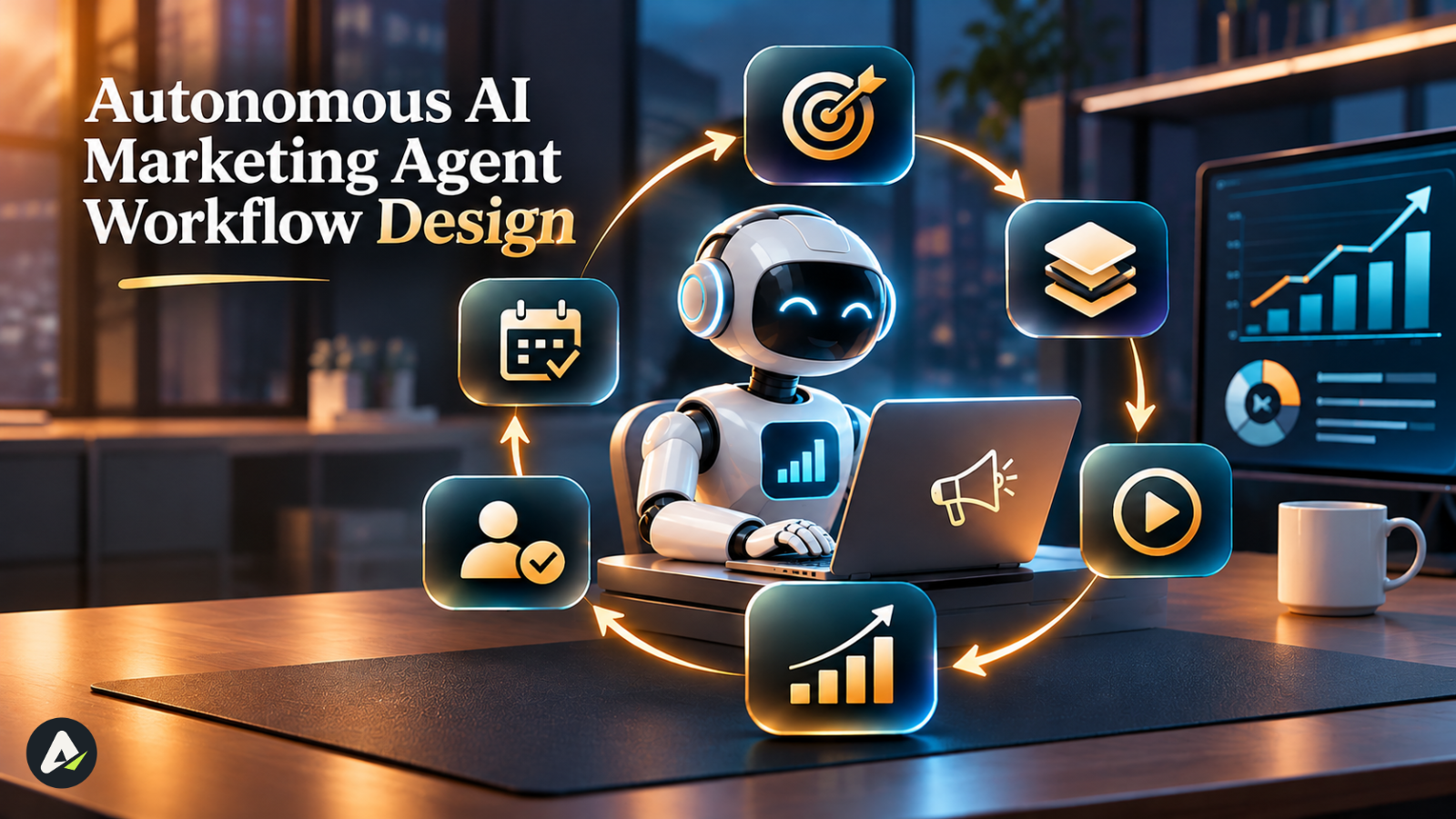
An autonomous AI marketing agent workflow lets an AI model pick its own actions, use connected tools like your CRM or CMS, and pursue a marketing goal within set limits. Design decides whether it helps or hurts. You choose what the agent handles alone, where a person steps in, and how you score the results.
Most teams ask how to make an agent fully independent. A sharper question: what is the least autonomy this task needs to deliver reliable results? Many marketing jobs run better on fixed automation with AI drafting. Agents pay off when the path changes from task to task.
This guide covers the full design. You will compare automation, AI workflows, and agents, match tasks to the right type, build a sample SEO brief agent, weigh costs, and set security controls, pilot thresholds, and compliance guardrails. Tables carry the key decisions, so you can lift them straight into your planning.
What Is an Autonomous AI Marketing Agent Workflow?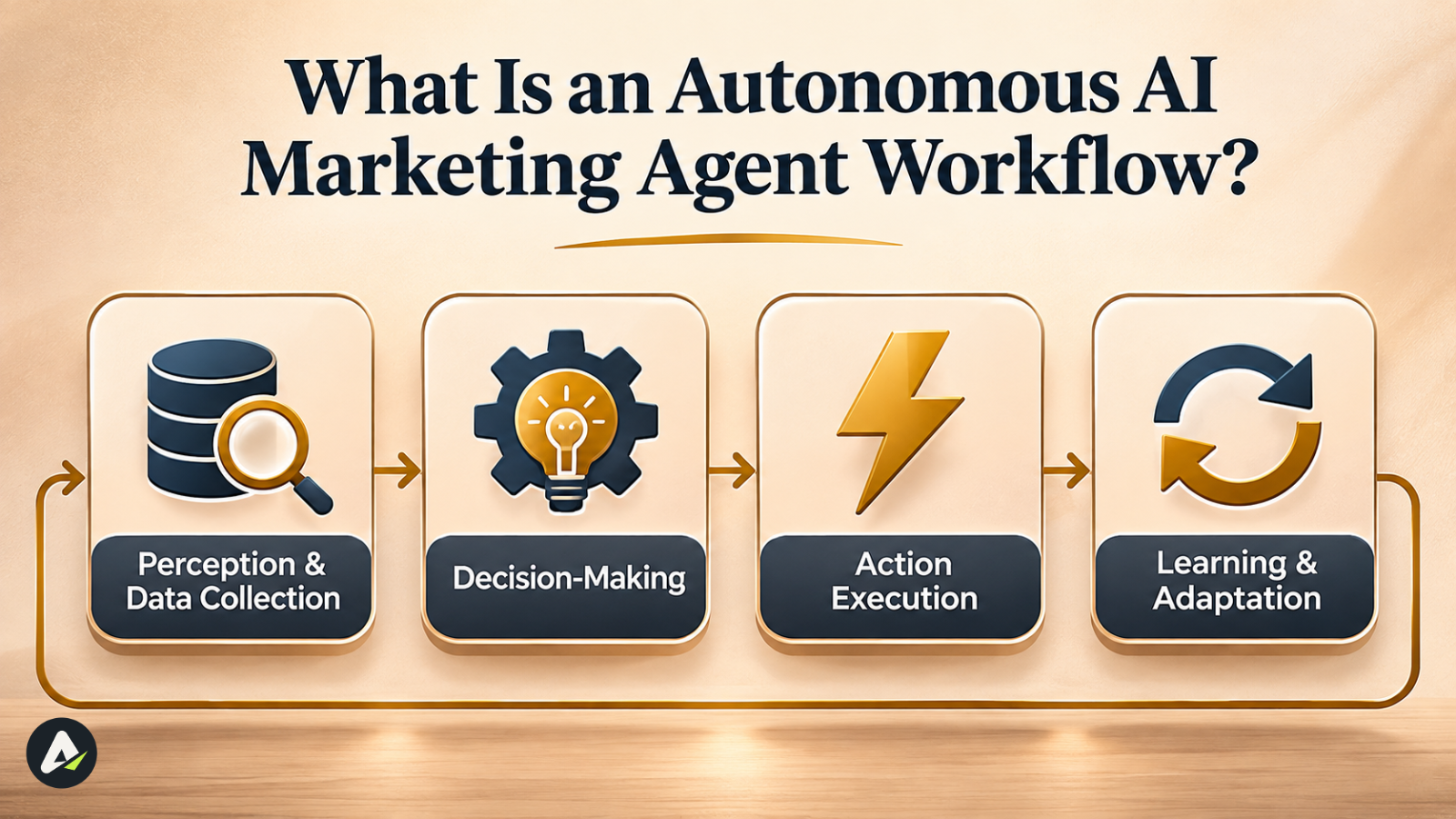
It is a system in which an AI model selects actions and uses connected tools to reach a defined marketing objective within specified permissions. When the design includes feedback loops, the model can also judge its results and adjust. Self-checking is optional, not required.
Anthropic splits the field in two. Workflows run models and tools through predefined code paths. Agents direct their own process and tool choices. Anthropic calls both “agentic systems.”
| Rule-based automation | AI workflow | Autonomous agent | |
|---|---|---|---|
| Who controls the path | Fixed rules | Fixed steps, AI inside each | The model |
| Best marketing fit | Scheduled emails, routing rules | Content repurposing, reporting | Open-ended research, lead triage |
| Main failure mode | Breaks on edge cases | Off-brand output at one step | Loops, cost spikes, goal drift |
Do autonomous marketing agents exist today?
Yes, in narrow lanes. Agents that choose their own tools ship in real products. Agents that chase complex business goals unsupervised remain rare. Gartner analyst Anushree Verma says current models lack the maturity for that, and many “agentic” use cases don’t need an agent at all. Gartner also estimates only about 130 of the thousands of agentic AI vendors are genuine and calls the rest “agent washing.”
Vendors build around this gap. HubSpot’s Breeze content agent drafts posts and pages for a person to review and publish. Its prospecting agent prepares outreach for a rep to review and send. A human holds the last gate in both designs.
Which Marketing Tasks Actually Need Agents?
Choose an agent when the steps change from task to task and mistakes are cheap to reverse. Choose fixed automation when the steps never change. A short task-fit test for agents can sort the borderline cases.
Anthropic advises finding the simplest solution possible and adding complexity only when needed. Gartner agrees: pursue agentic AI where it delivers clear value. This matrix reflects editorial recommendations, not a sourced standard:
| Marketing task | Recommended architecture | Autonomy |
|---|---|---|
| Scheduled emails | Fixed automation | High |
| Content repurposing | Fixed AI workflow | Medium |
| Competitor research | Bounded agent | High |
| SEO content briefs | Hybrid workflow | Medium |
| Lead qualification | Hybrid workflow | Medium |
| Personalized outreach | Agent with approval | Medium |
| Advertisement budgeting | Rules with approval | Low |
| Brand strategy | Human-led AI assistance | Low |
| Customer support | Bounded agent | Medium to high |
| Performance reporting | Fixed AI workflow | High |
Reporting earns “high” only under conditions. The agent needs read-only access, someone must validate its math independently, and its output must never move budget on its own.
How Do You Design an AI Agent Workflow?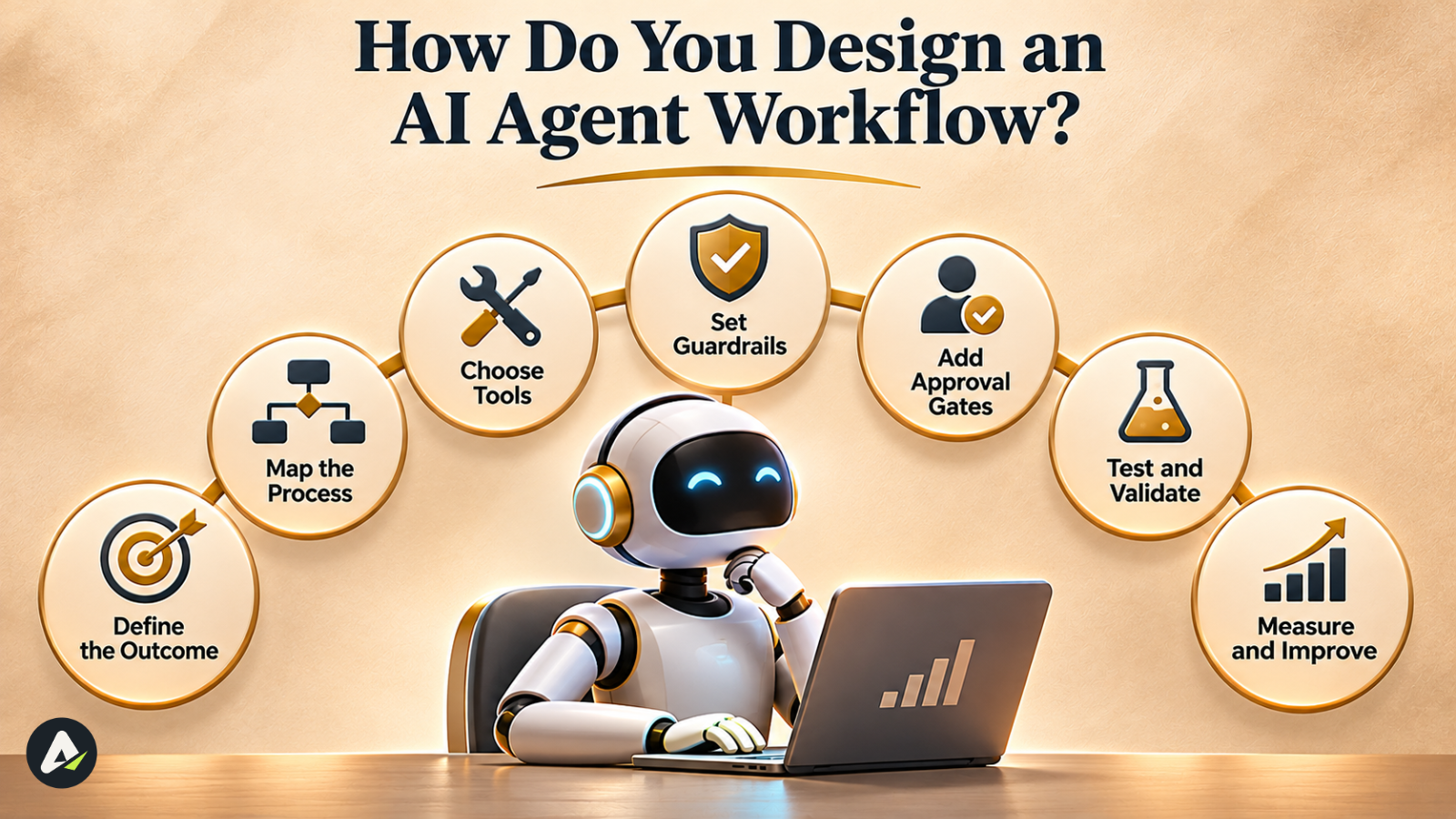
Pick one outcome, map the manual process, and assign each step to rules, an AI workflow, or an agent. Then set tools, permissions, caps, and test criteria before launch. Scoping skipped at the start causes most failures later.
- Pick one outcome. “Deliver three approved SEO briefs a week” works. “Improve marketing” does not.
- Map the manual process. Write down each step a person takes and mark the ones that need judgment.
- Assign a type per step. Rule-bound steps stay fixed. Judgment steps can go to an agent.
- Connect only needed tools. Start with read access.
- Cap the run. Set maximum steps, retries, and spend.
- Place human gates. The autonomy ladder below says where.
- Test on known cases. Replay past tasks with known answers and log every action.
Which design patterns do marketing workflows use?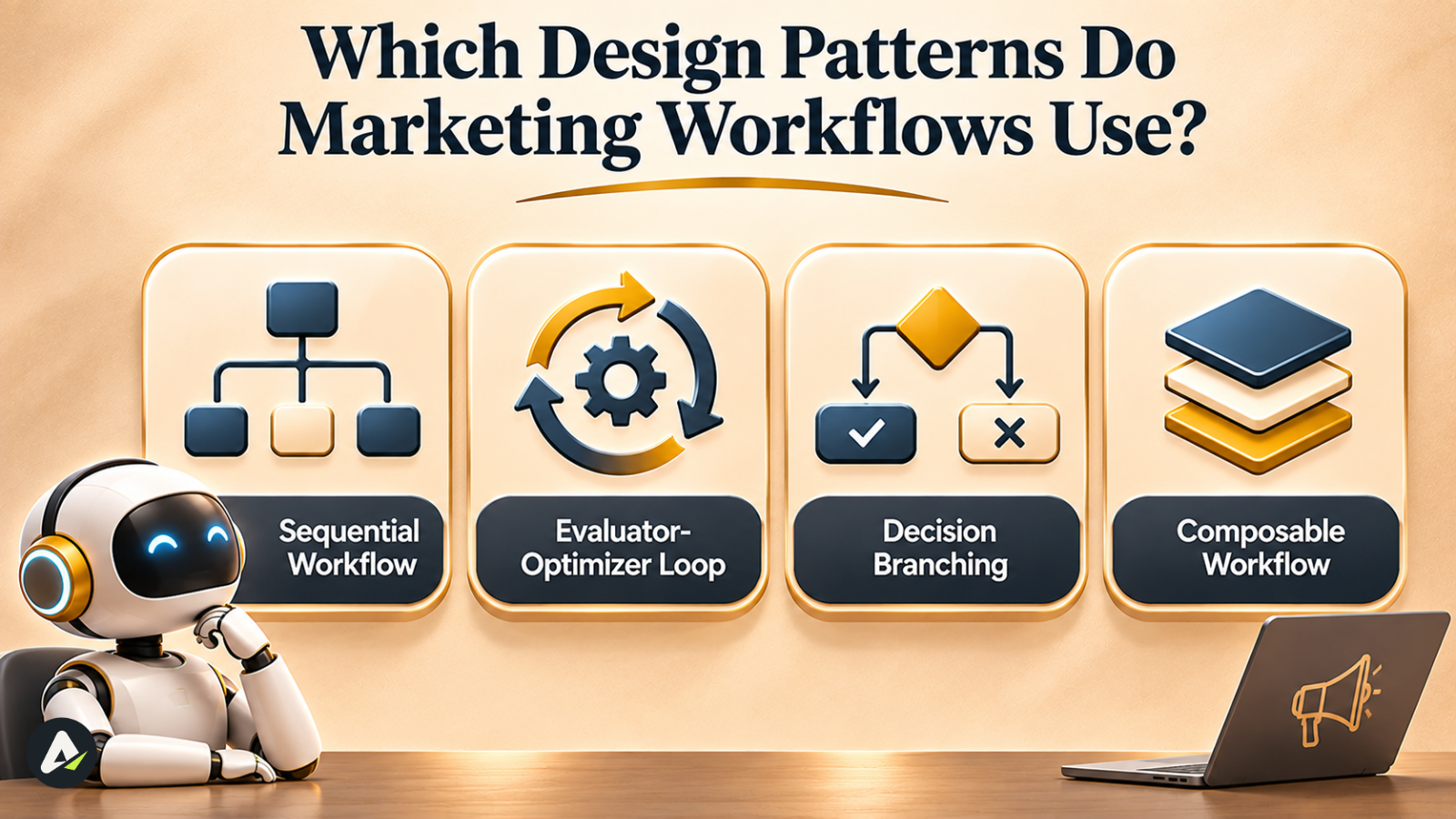
Anthropic names five composable patterns. Each maps to a marketing job:
- Prompt chaining: brief, outline, draft, edit, in fixed order.
- Routing: classify inbound leads or tickets, then send each down the right path.
- Parallelization: run competitor research, keyword extraction, and customer-language synthesis at once, then merge them into one brief.
- Orchestrator-workers: split one campaign brief into research, copy, and QA subtasks. The mechanics resemble how coding tools coordinate subagents and parallel threads.
- Evaluator-optimizer: separate writing from judging. One model or two can fill both roles, and revisions repeat until the criteria or an iteration cap stops them. The judge must stay honest, because agreeable evaluators wave weak drafts through.
Can agentic AI plan multi-step workflows?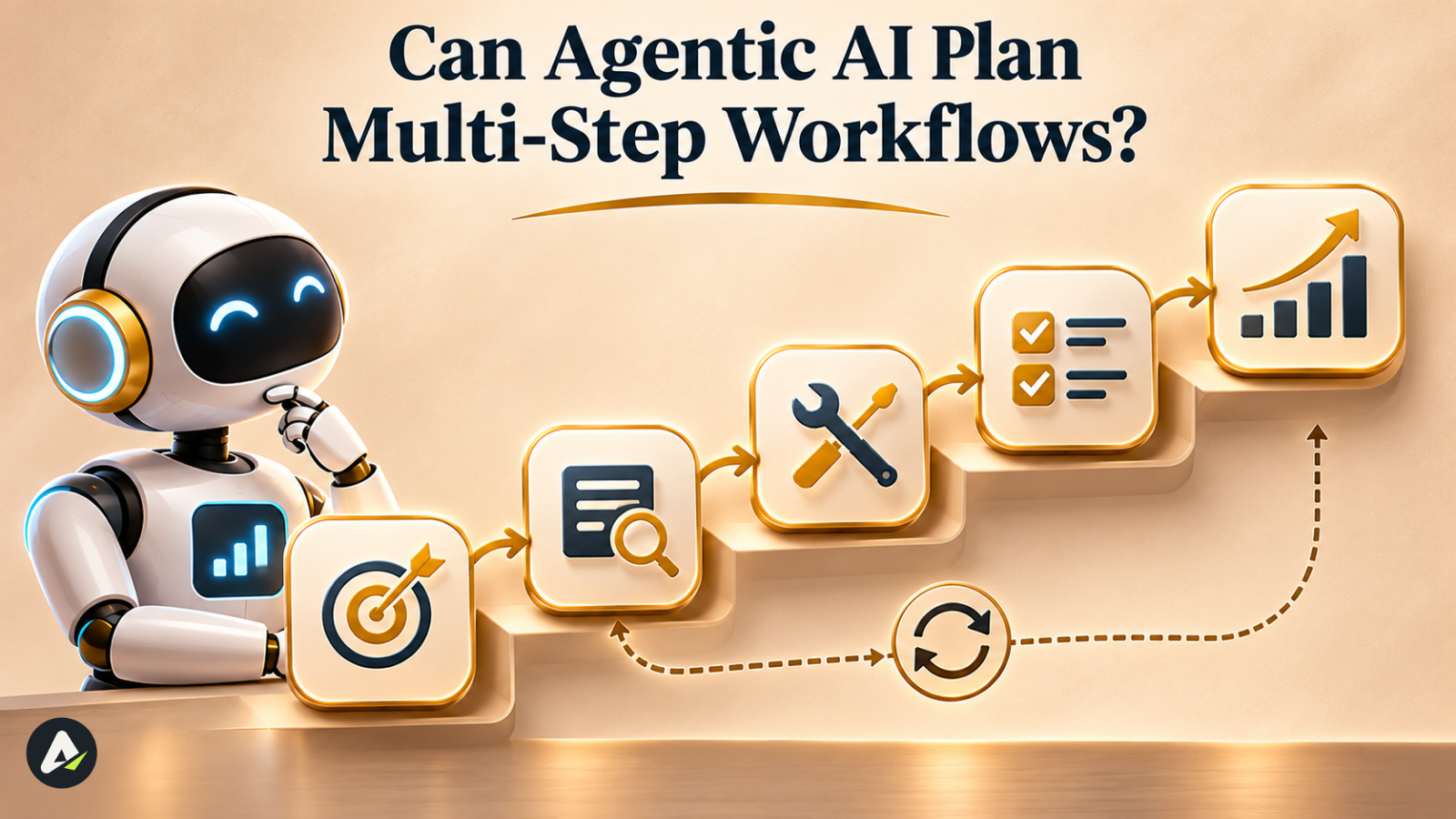
Yes, but reliability drops as chains grow. Each added step brings more cost and another chance to drift. Keep planning inside a narrow lane, such as “research five competitor pages and list content gaps,” not “grow organic traffic.” Evaluator loops work best when you can write the criteria down: voice rules, banned claims, required sources.
What Does a Complete Marketing Agent Look Like?
A complete agent needs a trigger, an objective, tools, caps, a gate, and a failure action. This illustrative SEO brief agent shows each part. It is a design example, not a tested build.
| Component | Example configuration |
|---|---|
| Trigger | Weekly schedule |
| Input | Target keyword and audience |
| Objective | Produce an SEO content brief |
| Tools | Search API, keyword database, CMS |
| Memory | Task state and brand guidelines |
| Maximum steps/retries | 10 / 2 |
| Budget per run | $1 (illustrative) |
| Human gate | Editorial review |
| Output | Approved content brief |
| Failure action | Stop and notify the editor |
| Permissions | Research access, controlled draft creation |
Three more blueprints follow the same Trigger → Steps → Gate shape:
- Content repurposing. An editor approves an article. The workflow drafts email, social, and landing page versions. An editor signs off on each.
- Lead research. An account shows buying signals. The agent researches it and drafts outreach. A rep reviews before sending.
- Support triage. A ticket arrives. The agent answers routine questions and escalates the rest. Escalation rules and sampled reviews act as the gate.
How Do You Choose a Platform?
Match the platform to your data and your team’s skills. CRM-native agents suit teams that live in one CRM. Visual builders suit marketers who avoid code. Frameworks suit developers who need custom control. The table gives general positioning, not a hands-on evaluation, so confirm current features before buying.
| Platform | Best suited for |
|---|---|
| HubSpot Breeze | CRM-native marketing automation |
| n8n | Custom tool-connected workflows |
| Make | Visual marketing automation |
| Zapier | Cross-application automation |
| LangGraph | Stateful custom agent orchestration |
| OpenAI Agents SDK | Programmatic agent development |
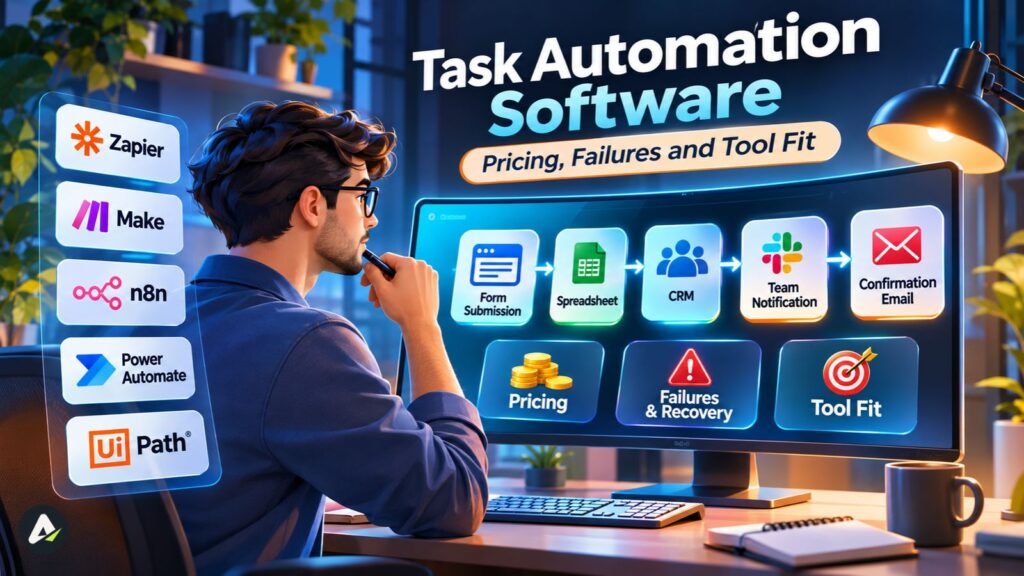
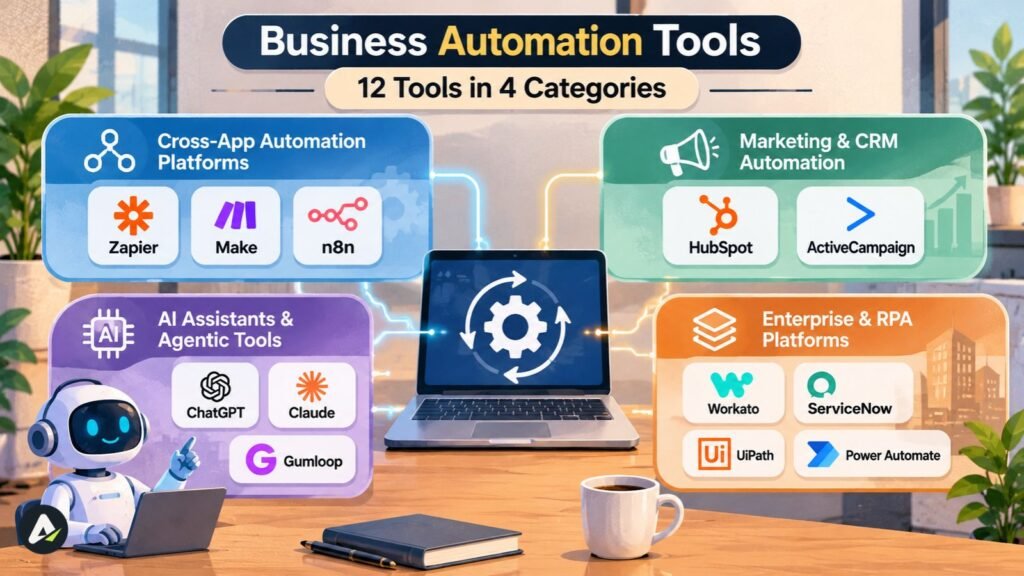
Pricing and limits get deeper coverage in comparisons of task automation software and business automation tools. Large organizations may also weigh ServiceNow’s approach to enterprise agents. Whichever you pick, favor tools that log every action and set permissions per step.
What Are the Four Levels of Marketing Agent Autonomy?
Autonomy runs from recommending to bounded independent action. Start low and promote an agent only after it passes written tests. This ladder is an editorial framework, not an industry standard.
| Level | Name | What the agent does |
|---|---|---|
| 1 | Recommend | Suggests actions. A person acts. |
| 2 | Draft for approval | Produces work. A person edits and approves. |
| 3 | Execute with approval | Acts after a person okays each action. |
| 4 | Bounded autonomy | Runs approved low-risk task types alone, inside permission boundaries, spending caps, monitoring, and an emergency stop. |
The rule depends on impact, not on who sees the output. Humans approve high-impact, irreversible, or policy-sensitive actions. Routine customer replies and reversible campaign tweaks can run alone within tested policies.
Elapsed time proves nothing, since an agent could finish five tasks in a month. Promotion follows the thresholds in the testing section below.
The aim is not maximum independence. It is the lowest autonomy that delivers reliable, measurable value.
Do Agents Cost Less Than Workflows?
Not automatically. Agents often cut human review but add model calls, rework, and upkeep. Measure cost per accepted task so every expense counts:
Cost per accepted task = total operating cost ÷ accepted tasks
Total operating cost covers infrastructure, model calls, tools, human review, retries, and a share of maintenance.
This comparison uses hypothetical figures for 100 tasks a month. It does not measure performance or a vendor benchmark:
| Monthly cost (100 tasks) | Fixed AI workflow | Autonomous agent | Hybrid |
|---|---|---|---|
| Model and tools | $15 | $80 | $40 |
| Human review | $250 | $125 | $150 |
| Rework | $40 | $70 | $30 |
| Maintenance | $20 | $60 | $40 |
| Total | $325 | $335 | $260 |
| Accepted tasks | 90 | 92 | 95 |
| Cost per accepted task | $3.61 | $3.64 | $2.74 |
Hybrid wins under these assumptions only. Rerun the math with your own tasks and reviewer rates.
How Do You Stop an Autonomous Marketing Agent From Going Wrong?
Build a control for every failure you can name. Agents read outside pages, customer records, and emails, and any of them can carry bad data or hidden instructions. Treat everything the agent retrieves as untrusted input, never as commands.
| Failure scenario | Required control |
|---|---|
| Hidden instructions on a competitor site | Separate retrieved content from instructions |
| Duplicate outreach emails | Idempotency keys and deduplication |
| Unauthorized CRM changes | Restricted tool permissions |
| Runaway API usage | Hard budget and iteration caps |
| Fabricated marketing claims | Independent source validation |
| Tool or API failure | Bounded retries, then escalation |
| Expired customer consent | Consent validation before every send |
| Incorrect campaign change | Rollback or compensating actions |
Tests of AI agents reading hidden instructions on publishing sites show why the first row comes first. Reports of agents going off-script in security tests show why caps and emergency stops belong in the design.
Split tool permissions into three tiers: read-only, draft or stage, and execute or spend. Grant each step the lowest tier it needs. Clean your data too. An agent scoring leads from stale CRM records ranks bad accounts confidently, at scale. Before automating, score the workflow on data, access, reversibility, and oversight.
What compliance rules apply?
Marketing compliance reaches well past AI transparency. Plan for GDPR, electronic marketing and consent rules, unsubscribe handling, data retention, and advertising-claim standards in each market. A lawyer can confirm your obligations.
On AI transparency, the European Commission’s Article 50 guidance says Article 50 applies from 2 August 2026. Providers of chatbots and AI agents that talk directly with people must disclose the AI unless that is obvious. A grace period to 2 December 2026 covers only the machine-readable marking duty, and only for systems already on the market before 2 August 2026. Deployers must label AI-written text on matters of public interest unless a human reviewed it or an editor controls it. Most promotional copy falls outside that text rule. Chatbots and generated media may not.
How Do You Test and Measure Agent Performance?
Run a pilot with written pass criteria, and compare three designs on the same tasks: a fixed AI workflow, an autonomous agent, and a hybrid. Set thresholds before the pilot starts. These are proposed criteria, not industry standards:
| Metric | Example acceptance threshold |
|---|---|
| Draft acceptance rate | At least 90% |
| Unsupported material claims | Zero observed |
| Unauthorized actions | Zero observed |
| Duplicate customer messages | Zero observed |
| Cost per accepted task | Below the fixed-workflow baseline |
| Human review time | At least 30% lower |
| Failed tool calls | Within a set tolerance |
Zero observed failures does not prove zero future risk, so keep logging after launch. Include abnormal inputs in the test set, and test repair as well as detection, since agents can spot a flaw yet fail to fix it. Track the business result the task serves, such as qualified leads or organic sessions.
An agent that clears every threshold moves up one level. An agent that misses one moves back down.
FAQs
Q. Do I need a fully autonomous agent for marketing?
No. Most tasks run better on fixed automation with AI drafting.
Q. Can an AI agent run a campaign alone?
Not reliably today. Use agents for research, drafting, and sorting, and keep people on high-impact decisions.
Q. What tools can I use to build a marketing agent?
Options include native CRM agents, visual automation platforms, and custom code on an LLM API. Anthropic recommends starting with direct API calls and understanding any framework before adopting it.
Q. How much does an AI marketing agent cost?
It depends on the model, the tools, run frequency, and review time. Calculate cost per accepted task on your own workload.
Q. Will Gartner’s 40% cancellation forecast hit my project?
It is a forecast, not a fact. Gartner predicts over 40% of agentic AI projects will end by 2027 because of cost, unclear value, or weak risk controls. A narrow scope, clear metrics, and firm caps lower your odds.
Related: Are Workflow Automation Agents Worth It? Tools, Uses & Risks
| Disclaimer: This article is for informational and educational purposes only. The workflow examples are illustrative design patterns, not independently tested implementations. AI agent capabilities, pricing, and regulatory requirements may change over time. Readers should verify current information before implementation. |

Kavin Reed
As AI agents move from experimental demos into everyday workflows, the questions around how they work, where they fit, and what happens when they fail are becoming harder to ignore. Kavin Reed writes about AI agents, automation, and the systems behind them, with a focus on practical adoption and real-world impact. His work examines the ideas, trends, and technical developments shaping how businesses and people use increasingly capable AI systems.
More from Kavin Reed →